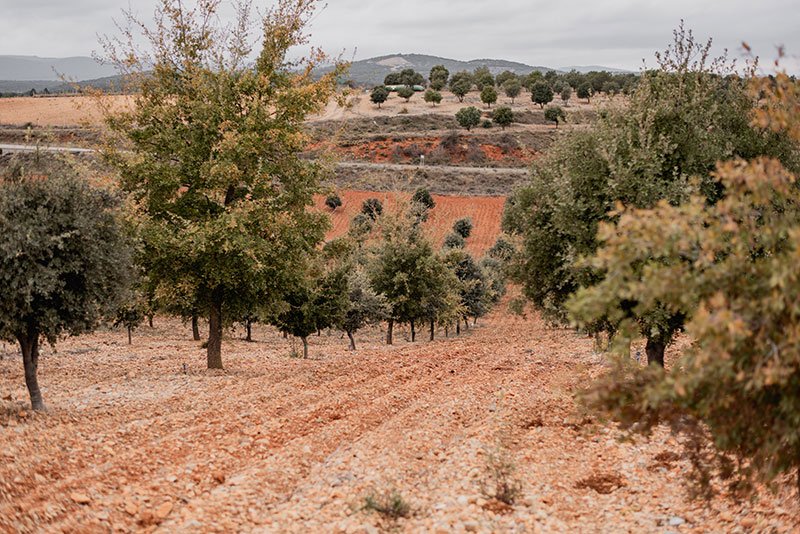
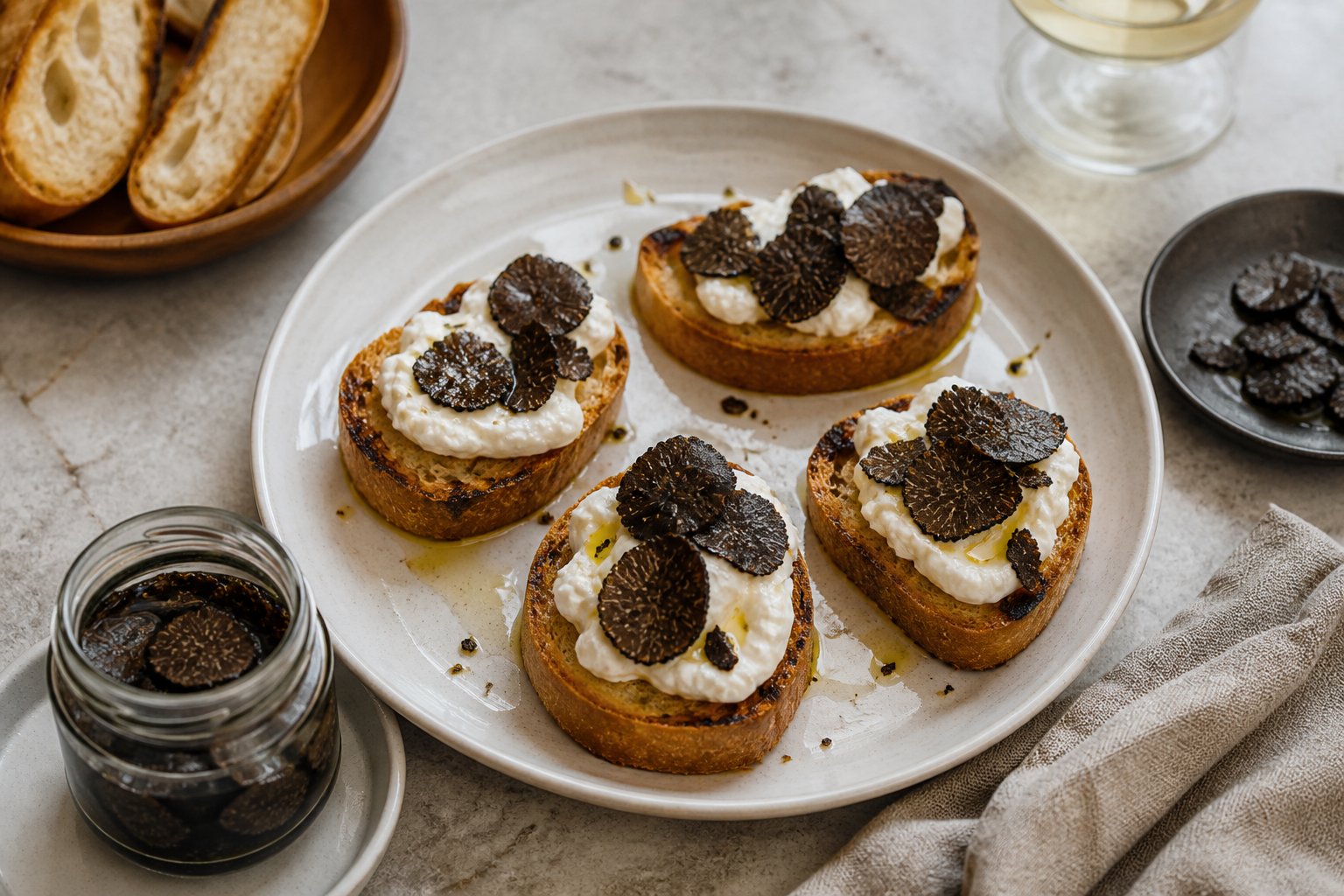
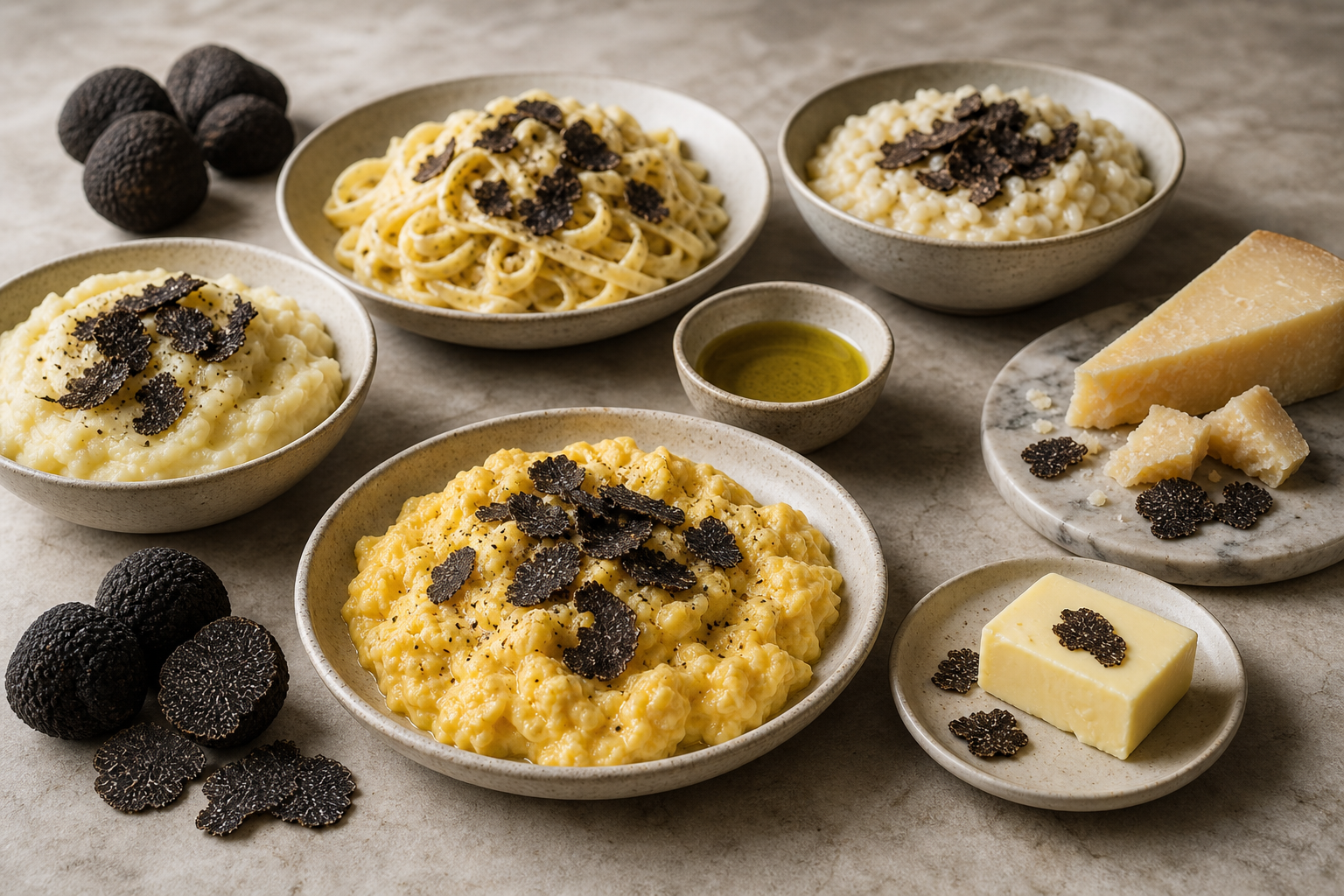
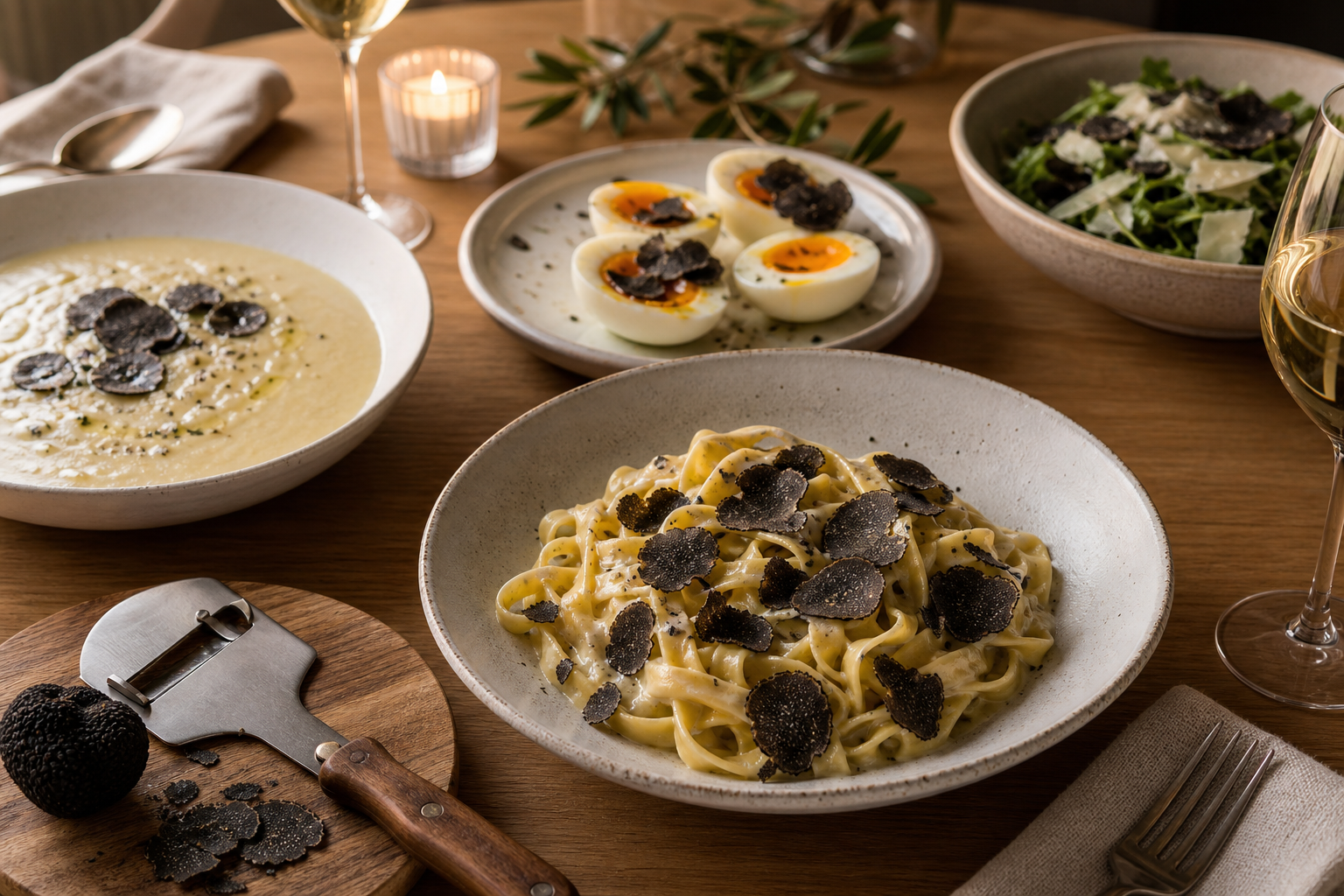
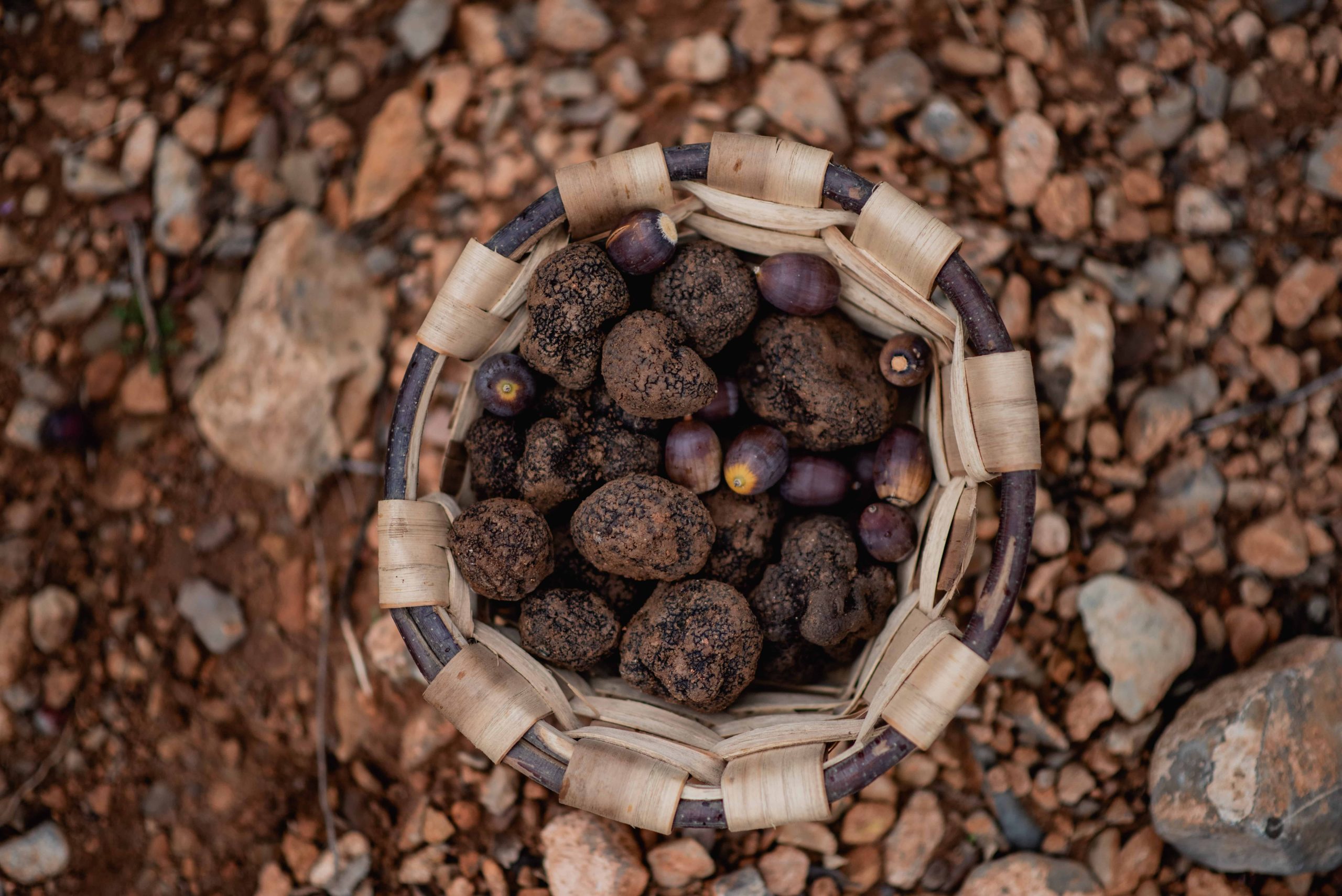
The black truffle is one of the most prized fungi in the world of haute cuisine. This fungus, specifically the Tuber melanosporum Vitt variety, grows underground in symbiosis with the roots of truffle trees such as holm oak, white oak, hazel, chestnut and kermes oak. Cultivating them requires years of dedication, constant care and a deep understanding of the terrain, as they can only thrive in very specific conditions of humidity, altitude, climate and soil type. It is this complexity that makes each truffle an extraordinary product.
Whether sliced or grated over any dish, black truffles can transform recipes and elevate them to gourmet status. Their deep aroma, lingering flavour and umami nuances make them an essential ingredient in avant-garde cuisine. If you are thinking of discovering the world of gourmet cuisine and want to make sure you can correctly identify authentic black truffles, we recommend you read on, because below we analyse in detail what distinguishes Teruel black truffles from other more common and lower quality varieties.
Characteristics of authentic black truffles from Teruel
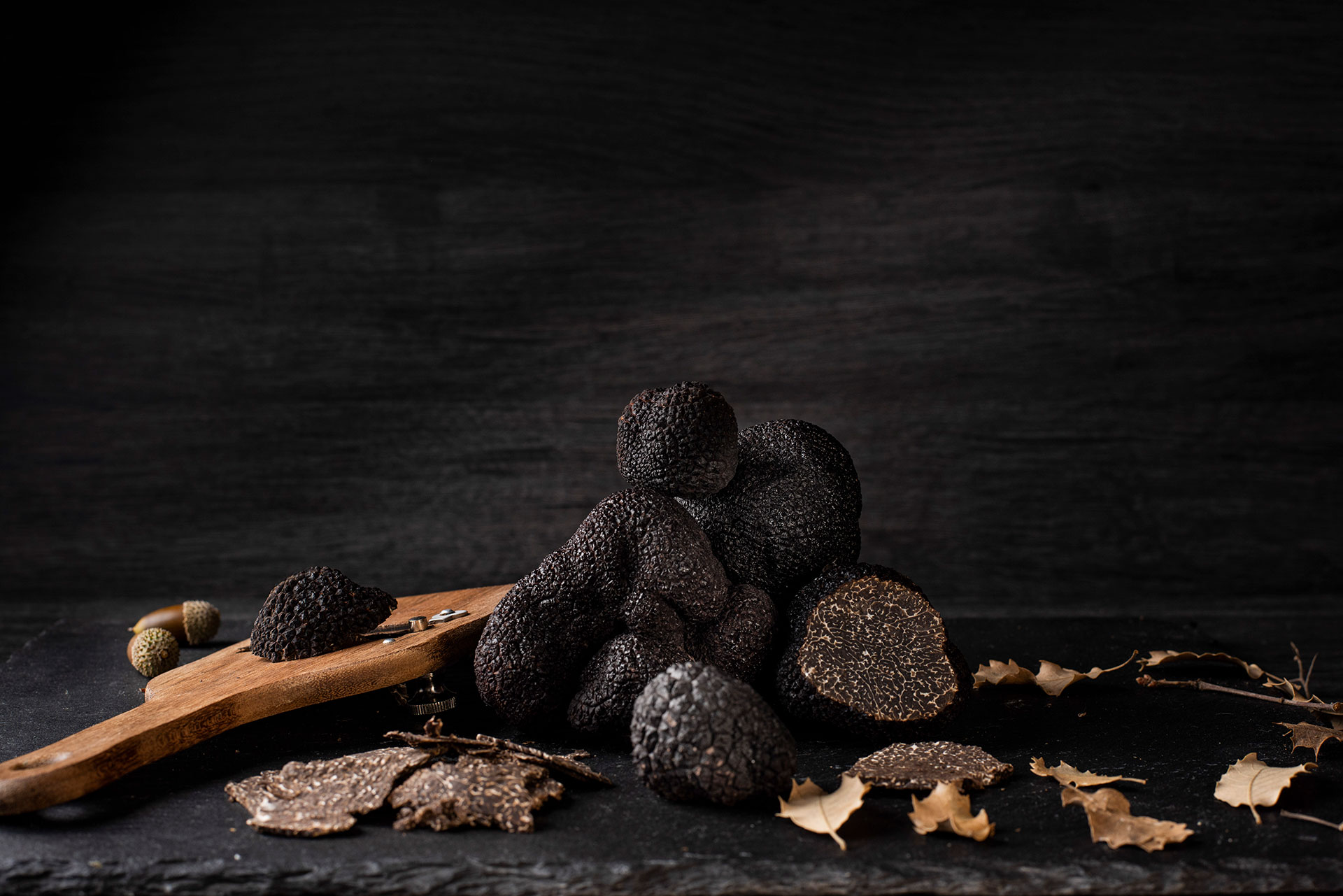
Authentic black truffles from Teruel belong exclusively to the Tuber melanosporum Vitt variety, a species that stands out for its rough, deep black exterior with very characteristic protuberances. When sliced, it reveals its gleba, which should be black or very dark, crossed by well-defined white veins. This combination is one of the most reliable hallmarks for distinguishing a high-quality truffle from other varieties.
Its size usually ranges from 20 to 200 grams, with average diameters of between 2 and 6 centimetres, although larger specimens can occasionally be found . Its shape is irregular, generally rounded, and its texture is firm and compact when it is at its optimum point of ripeness.
The aroma is its most characteristic feature, as it is both powerful and delicate, with notes reminiscent of mushrooms, damp forest and wet earth after rain. It is a deep, complex and persistent aroma. On the palate, it offers an umami flavour that blends mushroom nuances with more subtle ones reminiscent of walnuts or other types of nuts.
Its natural harvesting season in Teruel runs from November to March, and even early April in some years. Although today almost 100% of Spanish production comes from cultivation rather than the wild, this does not affect its quality, as the wild areas where it once grew are simply no longer productive. Cultivated truffles from Teruel maintain, and even improve, standards thanks to constant control and supervision and the optimisation of the environment for the production of this exquisite delicacy.
How does the black truffle from Teruel differ from other varieties?
The first fundamental difference between Tuber melanosporum and other species lies in their aroma. No other truffle offers the intensity, complexity and aromatic persistence that defines the black winter truffle. Tuber aestivum (known as the summer truffle) and Tuber uncinatum —the autumn truffle— have much milder, less profound aromatic profiles and are less capable of elevating dishes to a higher level.
Visually, we can see some differences. While Tuber melanosporum Vitt has a black interior with distinct white veins, aestivum and uncinatum have a beige or light brown gleba, a clear sign that we are dealing with a mushroom with lower aromatic potential. Specimens with a lighter-coloured interior have a less persistent flavour and therefore offer a significantly less intense gastronomic experience.
Another important distinction is their season. Tuber aestivum is harvested in summer and early autumn, and uncinatum in autumn, while melanosporum reaches its peak during the cold months, between November and March and even early April. This winter ripening gives Teruel truffles the aromatic concentration that has made them an international benchmark.
Furthermore, although all these varieties share certain morphological traits, their gastronomic value is not comparable. The black winter truffle is what has consolidated the reputation of regions such as Teruel. If you would like to learn more about its authenticity and exceptional quality, you can read this article on the black truffle of Teruel, where we explain what makes it so exceptional.
Why is the black truffle from Teruel recognised as the best?

The international fame of Teruel black truffles is not a matter of chance, but rather the result of an exceptional combination of natural, technical and human factors. Firstly, it should be noted that the province has a slightly more extreme Mediterranean climate than usual, with fairly cold winters and mild summers, as well as recurring summer storms and well-drained limestone soils. These conditions provide the perfect environment for the development of Tuber melanosporum Vitt, something that is found in very few areas of the planet.
Secondly, the experience of Teruel’s truffle growers is an essential factor. Decades of work, research and continuous improvement have led to the perfection of cultivation and irrigation techniques, as well as pest control. All this results in the cultivation of truffles that are much more aromatic, with an impeccable texture and optimal ripeness.
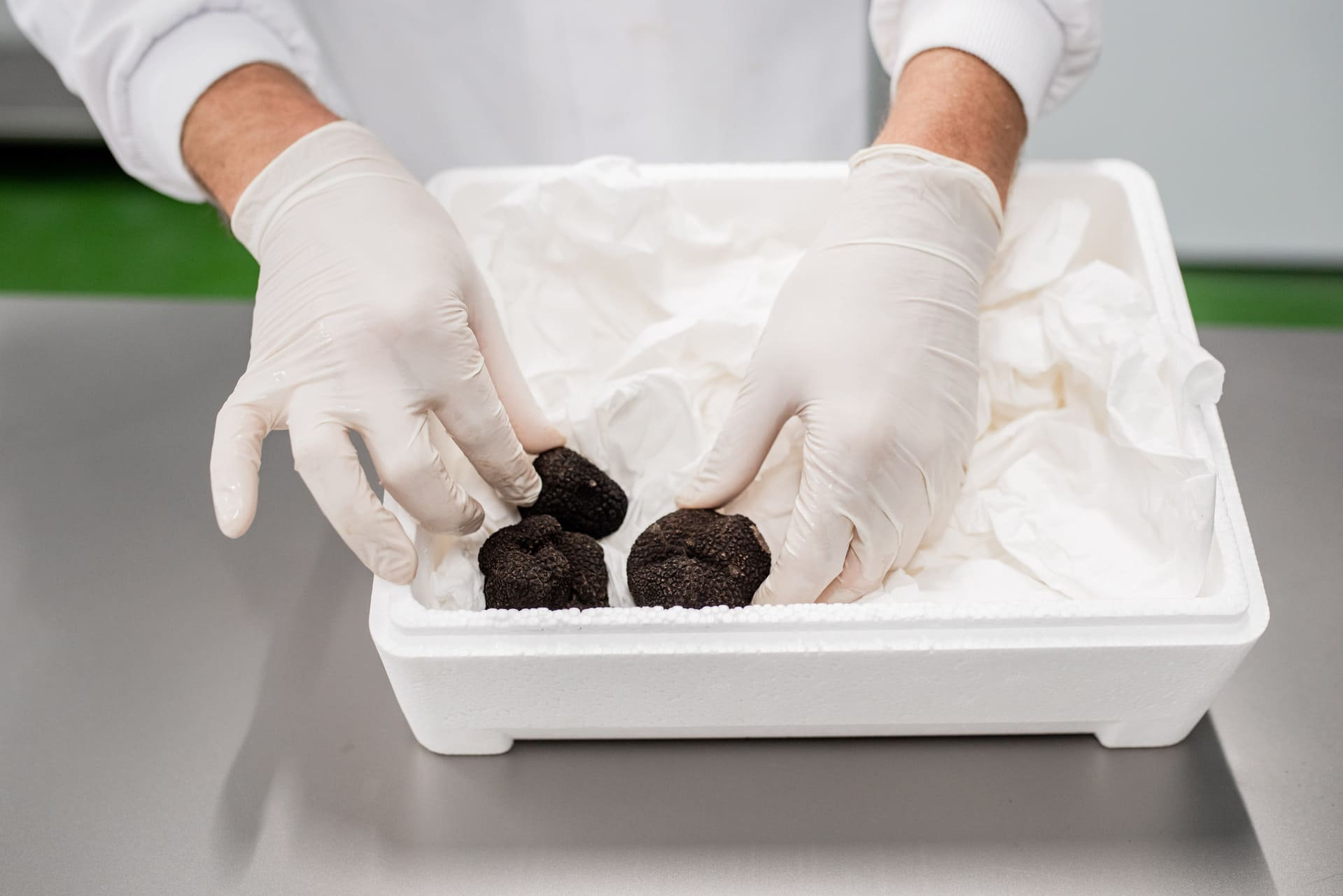
Another decisive factor is traceability. Teruel producers apply rigorous quality controls, from harvesting (which is always done by hand, one by one) to classification and online shipping to customers, as we do from our website, Trufalia. Thanks to this, this gourmet mushroom can reach your home with the highest quality and freshness.
Finally, we must also mention that Teruel’s gastronomic identity has contributed to consolidating its worldwide prestige. Chefs from many different countries often recognise that truffles from this province have an aromatic balance and incomparable intensity, making them an essential ingredient in many renowned kitchens. The Tuber melanosporum Vitt from Teruel is undoubtedly a true black diamond that has put the province on the world map of haute cuisine.