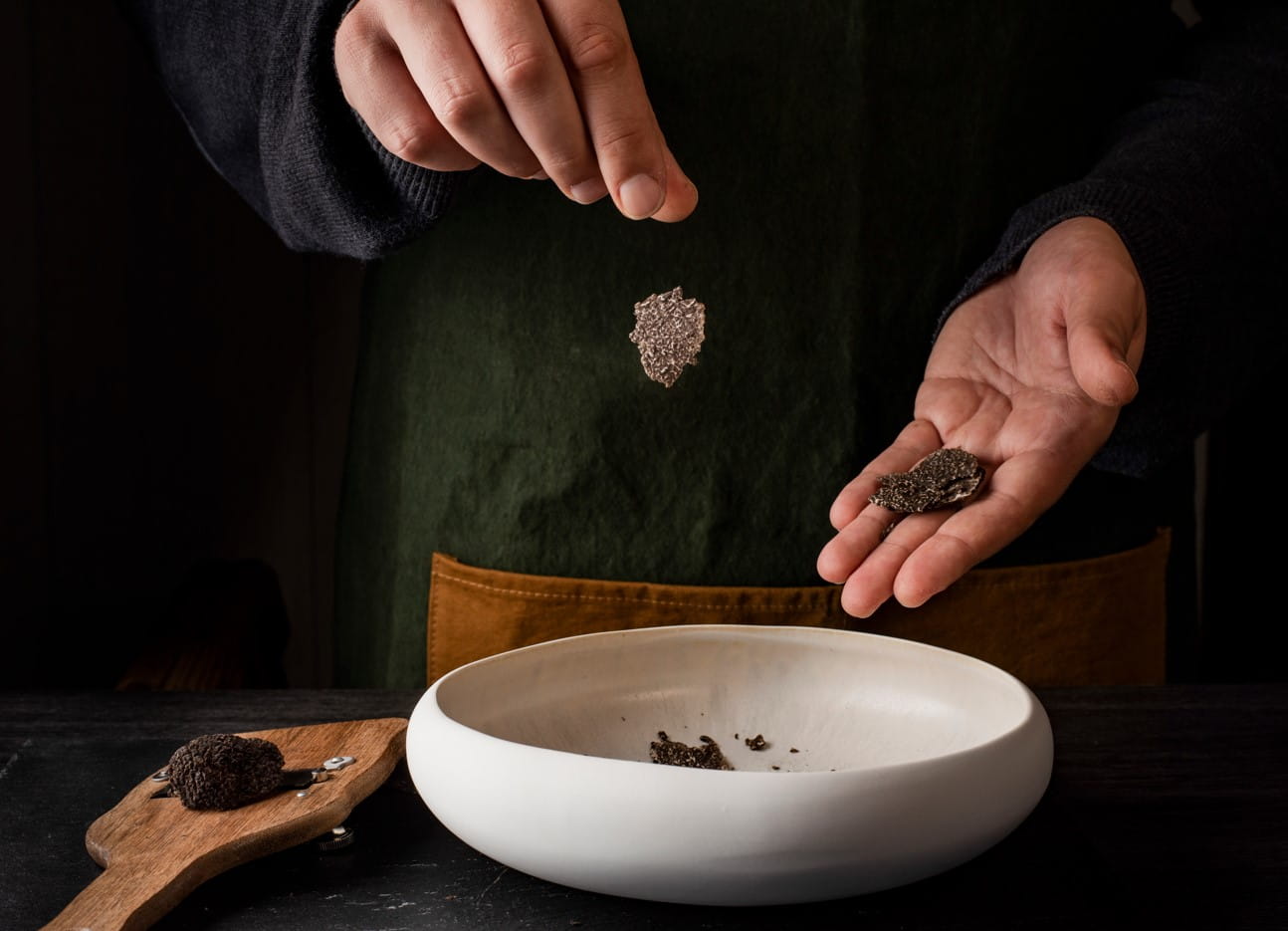
The black truffle Tuber melanosporum is one of the most highly prized ingredients in gastronomy, but also one of the most commonly confused. At first glance, it may look similar to other black truffles, and in the market it isn’t always easy to tell what is truly authentic from what only resembles it. If you’re just starting to take an interest in this world, it’s normal to have questions: how can you recognize it by its appearance? What really sets it apart from other varieties? Why does its aroma and price vary so much? Here are the most reliable keys to identifying it and buying it with confidence.
How to Recognize Black Truffle (Tuber melanosporum) at First Sight
Recognizing a black truffle (Tuber melanosporum) at first sight is possible if you know what details to look for. Although many truffles share a dark, rough appearance, melanosporum has very distinctive traits. The first thing to check is the exterior: it has a black or dark grey-black skin with well-defined warts that are small and angular, usually forming a firm and regular texture. The surface is not smooth or uniform, but it does have a compact, dry texture without excessive shine.
Its size can vary significantly, from small specimens to large pieces, but what matters most is the feel. A high-quality melanosporum usually feels hard, dense, and heavy for its size. If it feels soft or moist when pressed, it may be overripe, deteriorated, or it may not be a true winter black truffle.
Cutting it open is one of the most revealing tests. When sliced, the black truffle (Tuber melanosporum) shows a dark gleba (inner flesh), typically deep brown or purplish-black, crossed by fine, evenly distributed white veins that create an elegant and contrasting pattern. This network of veins is usually delicate and homogeneous—not thick or irregular. Also, when it is at its best, the inside looks compact, with no watery areas or cavities.
Finally, the aroma reinforces visual identification. Melanosporum stands out for a deep, warm, persistent scent, with notes reminiscent of damp forest, cocoa, nuts, and clean earth. If the smell is weak, flat, or overly aggressive, it’s worth being suspicious.
Differences Compared to Other Truffle Varieties
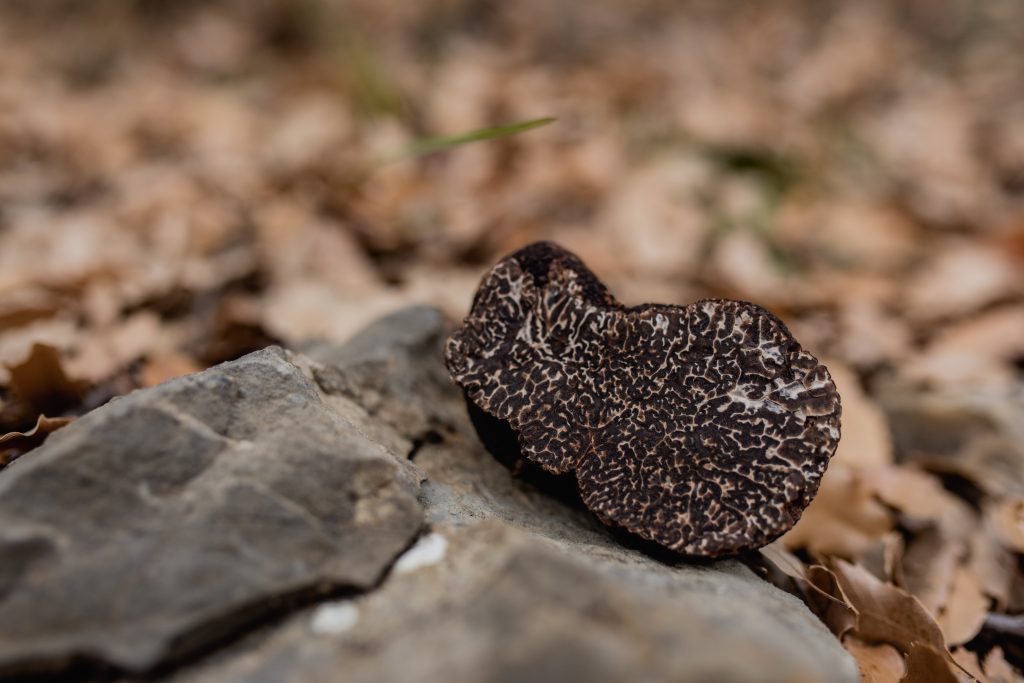
The most common confusion happens because many black truffles share a similar outer color, but they do not offer the same aromatic intensity or culinary value. Black truffle (Tuber melanosporum) is the star of winter, appreciated for its aromatic power, complexity, and its ability to transform a dish with only a small amount. However, there are other species sold as “black truffle” which, although edible, do not share the same profile or the same culinary quality.
As mentioned, differences usually focus on four aspects: the type of outer warts, the internal color and pattern when cut, the intensity of the aroma, and the harvesting season. Melanosporum is distinguished by its enveloping fragrance and its dark flesh with fine, clearly defined light veins. Other truffles may be milder, have a less contrasted interior, or even a more acidic and less elegant smell.
Price is also often a clue. When a supposed melanosporum is sold too cheaply in peak season, it’s best to take a closer look. The market can offer good options, but a significant price difference never happens by chance.
Below, we’ll review the key comparisons with the most commonly confused varieties, clearly explaining the differences between the different types of truffles.
Differences Between Tuber melanosporum and Tuber brumale
Understanding the differences between Tuber melanosporum and Tuber brumale is essential, because both are winter truffles and can appear in the same period. At first glance they may look similar, but the culinary experience is very different.
Tuber brumale usually has a sharper, less refined aroma. While melanosporum offers a complex and seductive fragrance, brumale tends to be more direct, with a base note that some people associate with strong dampness, leather, or even a rougher edge. This doesn’t mean it’s bad, but it doesn’t reach the elegance of melanosporum.
When cut, brumale can also be confusing, although it often shows a slightly lighter gleba with veins that may appear thicker or less delicate. Melanosporum, on the other hand, usually maintains that attractive contrast between dark flesh and fine white marbling, creating a sharper visual effect.
In cooking, the difference is especially noticeable in simple dishes. With melanosporum, a small amount perfumes eggs, pasta, or potatoes with high, balanced intensity. With brumale, the aroma may feel more limited or less harmonious if you’re looking for a finer flavor. That’s why knowing the differences between melanosporum and brumale helps you buy according to the type of dish and the result you want.
Differences Between Tuber melanosporum and Tuber aestivum
The differences between Tuber melanosporum and Tuber aestivum are among the most important, because even the season changes here. Tuber aestivum, known as the summer truffle, appears when melanosporum is out of season. Although it is often sold as an alternative, its profile is much milder.
In appearance, aestivum may have pronounced warts, but its interior is usually lighter, with tones ranging from beige to hazelnut brown, and with less defined marbling. Melanosporum, by contrast—as we have already explained—has an intensely dark gleba and fine, highly visible white veins, especially when it is at its peak.
The biggest difference, however, is the aroma. Summer truffle is pleasant, but less powerful and less persistent. It may recall nuts, mushrooms, or earth, with a lighter character. Melanosporum, in comparison, delivers a much deeper, enveloping, unmistakable aroma, capable of infusing a dish with just a few grams.
That’s why, when looking at the differences between Tuber melanosporum and Tuber aestivum, the key is understanding that they’re not in the same culinary league. Aestivum is ideal for more everyday use, while melanosporum is reserved for special moments or for recipes where you want a memorable result.
Differences Between Tuber melanosporum and Tuber indicum
The differences between Tuber melanosporum and Tuber indicum deserve special attention because this is where the greatest risk of commercial confusion comes in. Tuber indicum, known as the Chinese truffle, closely resembles melanosporum on the outside: it is black, warty, and to an untrained eye it can pass as a true black truffle.
The difference becomes noticeable when you cut it open. Indicum often shows thicker or less fine veins and a gleba that may look less uniform. In many cases, the internal pattern lacks the elegance and visual precision of melanosporum. Even so, some specimens can be deceptive, so it’s important to rely on more than one indicator.
Aroma is the major breaking point. Melanosporum has a powerful, complex scent, while indicum is usually much more neutral, with a weak fragrance that fades quickly. It may add texture, but not the aromatic explosion expected from an authentic Périgord black truffle.
In the kitchen, this leads to disappointing results if the goal is to add aroma. You can grate indicum and barely notice it, whereas with melanosporum the dish changes immediately. That’s why truly understanding the differences between Tuber melanosporum and Tuber indicum helps you avoid overpaying for a product that doesn’t deliver the culinary value it promises.
How to Know If You’re Buying Authentic Black Truffle (Tuber melanosporum)
Buying authentic black truffle (Tuber melanosporum) requires looking, smelling, and confirming certain key details. The first is the season: melanosporum is a winter truffle, so if it appears outside those months, it is very likely a different species. This simple check already helps eliminate many confusions.
The second step is to demand transparency. A serious seller should have no problem indicating the full species name, its origin, and the batch. If the label only says “black truffle” and nothing more, it’s best to be cautious. Melanosporum doesn’t need to hide behind generic terms, because its value lies precisely in its identity. That’s why in our online store you will always find truffles properly named, so you never have doubts about the authenticity of the product you purchase.
It is also important to inspect the product’s condition. A fresh melanosporum looks firm, feels dry to the touch, and has a clear aroma even before you bring it too close. If it is overly moist, unusually shiny, or has soft spots, it may be deteriorated or stored incorrectly. The aroma should be intense but elegant—never chemical or artificial.
Another key factor is the cut. If you have the chance to see it opened, look for a dark interior with fine, evenly distributed white veins. That pattern is one of the best authenticity indicators compared to species that imitate the exterior appearance. Also, if the inside looks pale or poorly defined, it may not be melanosporum or it may be immature.
Finally, trust specialized suppliers and purchasing channels that offer guarantees, as we do at Trufalia, specialists in black truffle of the Tuber melanosporum variety.
If you’ve already read about the differences between melanosporum and Tuber brumale, the differences between Tuber melanosporum and Tuber aestivum, and the differences between Tuber melanosporum and Tuber indicum, you’ll have many more tools to identify what you’re buying and to judge whether the price is justified.
Authentic melanosporum is not only recognized—it is felt. When it is good, its fragrance is unmistakable and its inner appearance confirms what the outside promises. And once you learn to distinguish it, buying truffle stops being a blind gamble and becomes a confident choice.