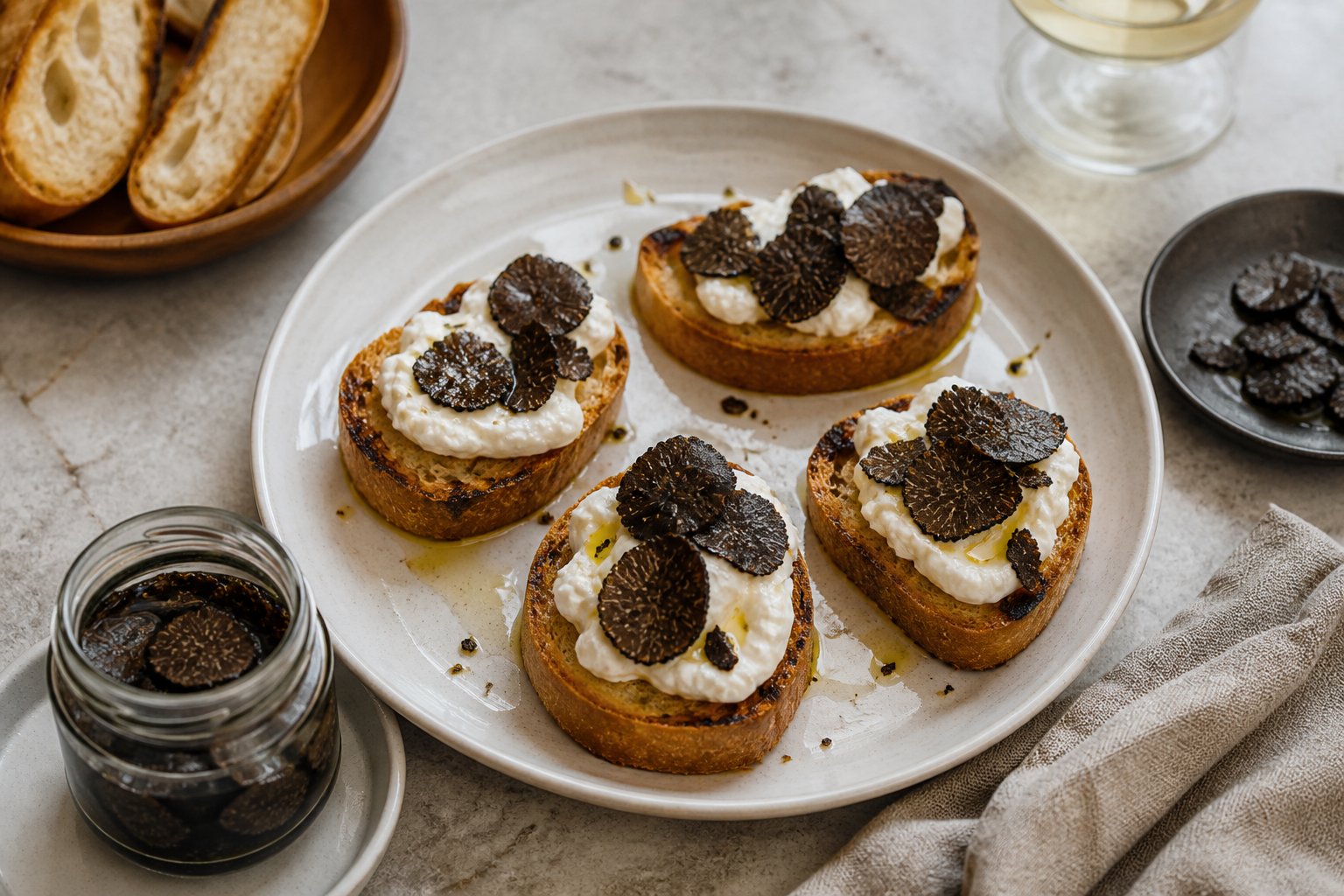
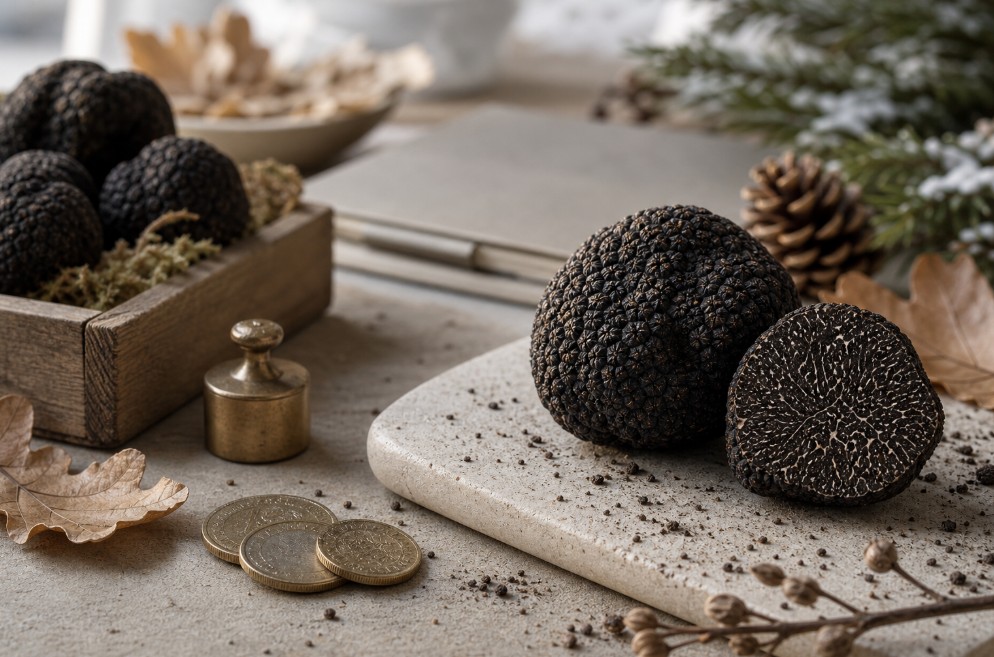
An autumn menu featuring black truffle does not have to make every dish expensive. Control begins by deciding where the ingredient delivers the most value, how many usable grams each serving needs and how every piece will be used. Price per kilogram alone is too imprecise; the useful kitchen indicator is the true truffle cost for each dish sold.
There is no need to spread truffle across the entire menu either. A short, well-designed selection communicates the product more clearly, simplifies service and reduces waste. Truffle can lead one preparation, finish another in front of the guest or be offered as a clearly defined supplement.
Calculate cost from usable grams
The basic calculation is straightforward: multiply the current price per gram by the usable grams planned for each serving, then add the appropriate share of actual waste. Guests do not need to see the formula, but it should appear in the dish specification.
Do not choose a portion by intuition alone. Carry out a full test, weigh the truffle before and after service and record how many portions it produces. This guide to how much black truffle to use per person provides a planning reference, which must then be adapted to the cut, recipe and desired intensity.
If some portions are finished with slices and others with grated truffle, create two standards. The visual volume of a slice is not the same as the aromatic distribution of fine gratings, even when their weights look similar.
Choose bases that carry the aroma
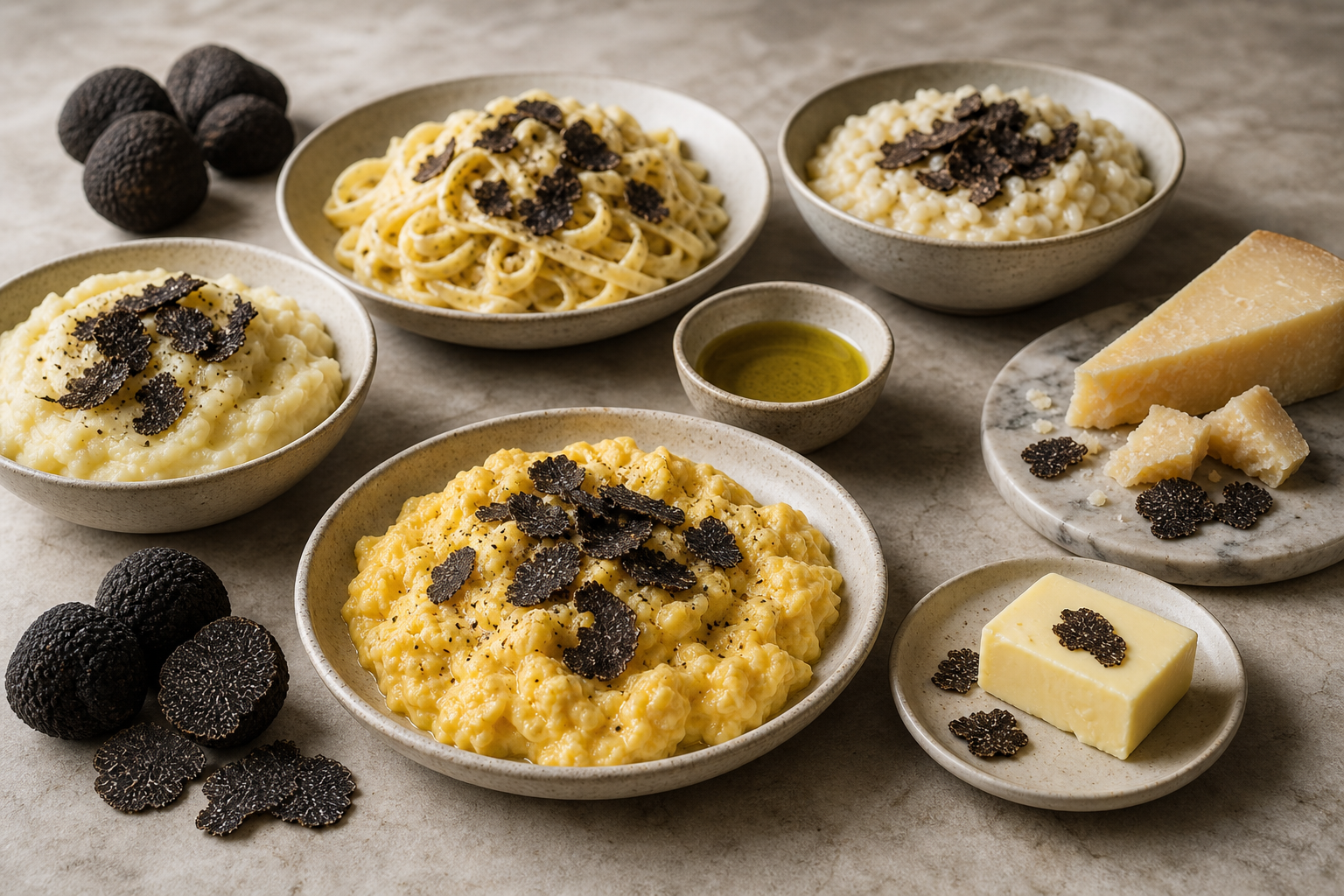
Black truffle works well with clean-tasting ingredients that contain some fat: eggs, potatoes, butter, cream, mild cheese, pasta, rice and selected seasonal vegetables. These bases help distribute the aroma and allow a controlled quantity to remain noticeable.
Review which foods pair best with truffle before finalising the menu. Aromatic compatibility matters more than placing several expensive ingredients together. A heavily reduced stock, intense smoke or excessive spice can force you to add more truffle just to make it perceptible, increasing cost and often weakening the result.
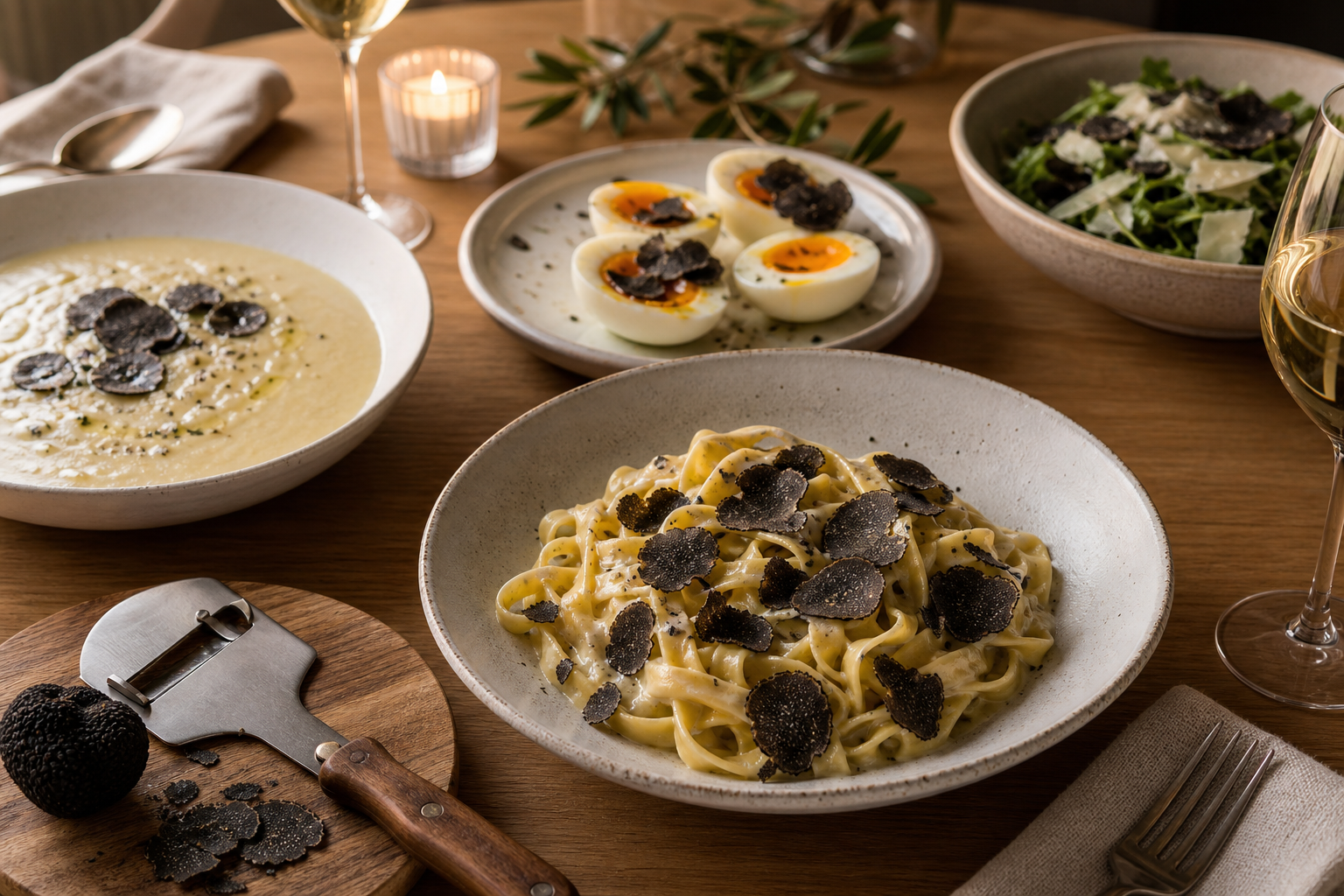
Design the dish so that the guest encounters the aroma when it approaches the table, when they cut into it or when they mix it. A warm base and a final addition are often more effective than lengthy cooking.
Give a limited number of dishes distinct roles
A balanced menu can use three models. The first is a dish in which truffle is the main feature and supports a specific selling price. The second uses a smaller amount in a sauce or cream and reinforces it at the end. The third offers a weighed, transparently priced optional supplement.
You do not need all three. Choose the models that suit the dining room, the speed of service and the team’s ability to weigh or slice during the pass. Every use should have a culinary purpose and an operational rule.
This concentration improves communication too. Front-of-house staff can explain the variety, origin and technique accurately instead of repeating one generic description across half the menu.
Buy sizes and formats for each preparation
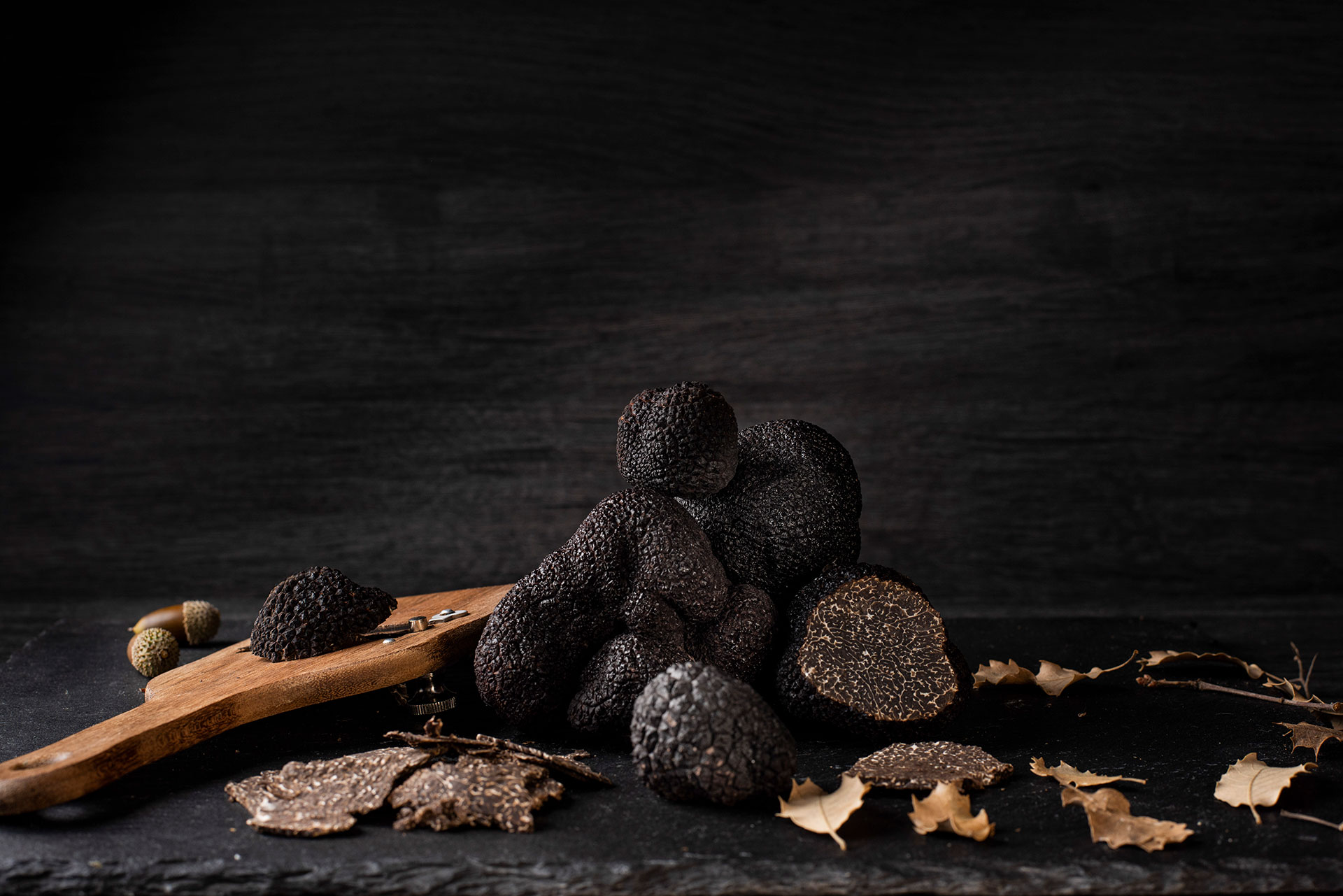
Regular pieces may be useful for tableside slicing. Smaller or irregular pieces can offer the same aromatic value when grated, chopped or incorporated into a sauce, provided the variety and ripeness are correct. Separating these uses prevents you paying for a visual quality the dish will never show.
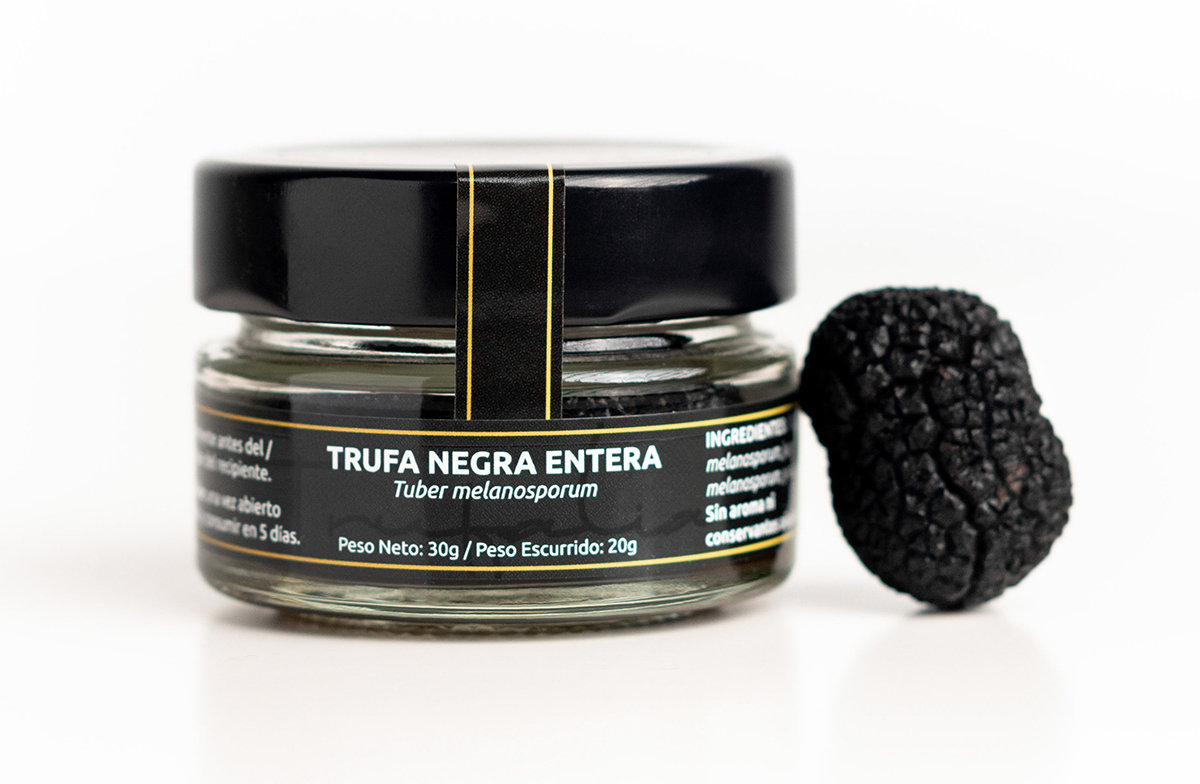
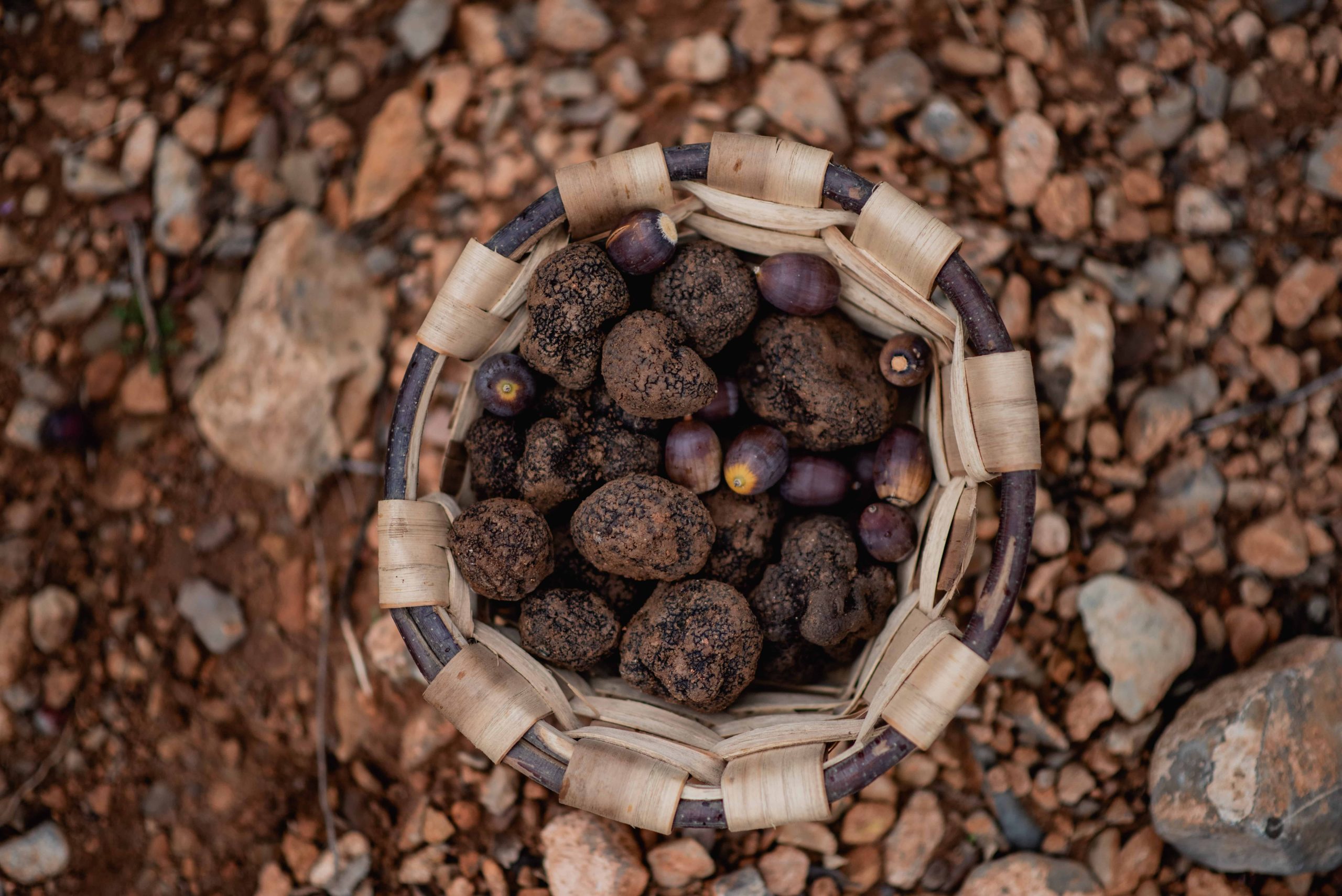
Trufalia sells Tuber melanosporum Vitt. black truffle. Its flesh should be dark with pale veins, while its aroma distinguishes it from similar varieties. Black truffle does not taste bitter. If a recipe needs bitterness, it should come from another element and remain controlled so that it does not mask the truffle.
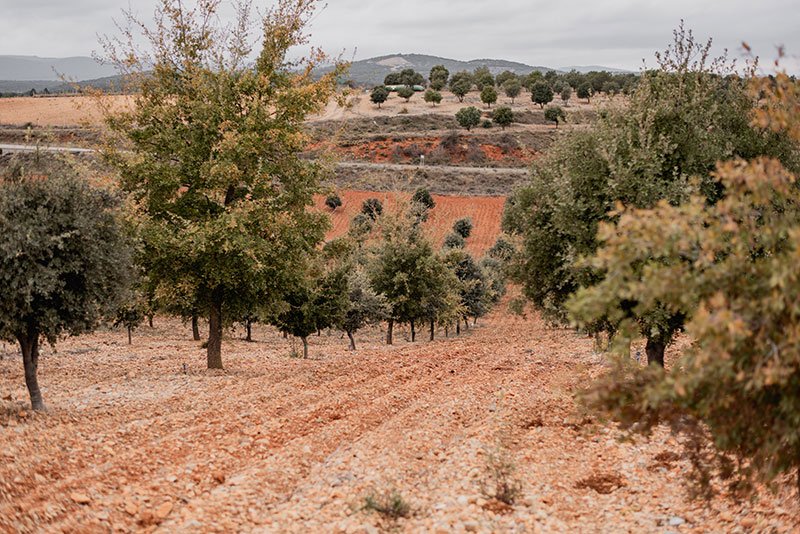
Almost 100% of the black truffle produced in Spain is cultivated, not wild. This does not reduce its quality: woodlands that once yielded truffles now produce very little, and cultivation enables growers to manage the host trees, soil and harvesting. When purchasing, consider variety, ripeness, aroma, condition and traceability as well as size.

Use every piece and monitor waste
Allocate the most regular surfaces to slicing, then use portions that do not form a perfect slice for grating, truffle butter, sauces or fillings. This is not about concealing scraps; it means giving each part a technically suitable and recorded purpose.
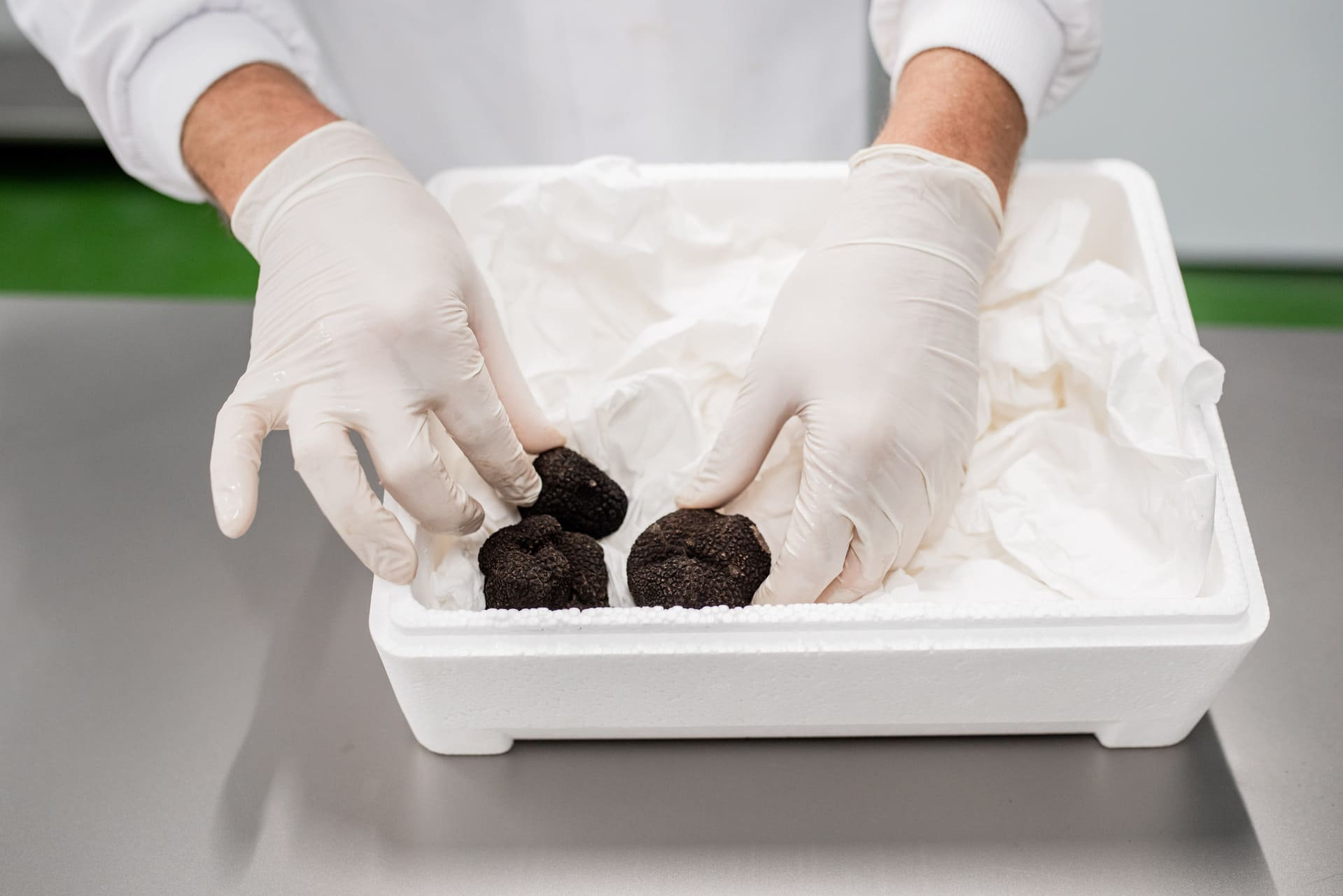
Weigh the product on receipt, before service and at the end of the day. Record sales by dish, grams used and any discard. After one week you will have useful data for adjusting the purchase, portion or number of truffled preparations.
Storage is part of costing. A large order may look efficient in terms of delivery, but can become expensive if it increases waste. Smaller, more frequent deliveries may improve the real cost where logistics and the supplier make that possible.
Update the recipe costing as the market changes
Fresh truffle is seasonal and its quotation is not fixed. Review cost per gram with every purchase instead of using a recipe sheet calculated weeks earlier. This guide explains why truffle prices vary throughout the year.
If the cost rises, do not silently reduce the portion until the dish loses its point. Consider adjusting the selling price, changing the technique, limiting availability, offering a supplement or reserving truffle for the preparation where it will be most noticeable. Protect both margin and the promised experience.
Test the service before launching the menu
Prepare every dish under real pass conditions. Time the slicing, verify temperature, weigh the portion and confirm that the aroma reaches the table. Train the team to explain that the kitchen uses Tuber melanosporum Vitt. and to apply the same standard to every serving.
To discuss availability and formats, browse Trufalia’s black truffle selection with an estimate of dishes, services and quantities. A profitable menu comes from coordinating product, recipe, purchasing and operation, not from using less truffle without a clear reason.