Choosing a Sarrión black truffle producer involves more than finding a shop that mentions Teruel in its catalogue. Specialisation shows in the information provided, the way each truffle is identified and the care taken from the orchard to delivery. A producer understands the species, season, maturity, selection and storage; a simple reseller may only move a product about which it offers few details.
This does not mean that every intermediary is a poor choice. What matters is knowing who controls the product and who can answer for its origin and condition. The following signs help you check before buying.
Producer or reseller: the difference lies in product control
A specialist producer is directly involved in cultivation or has a close, traceable relationship with the orchards supplying the truffles. The producer also takes part in harvesting, sorting, storage and order preparation, so it can describe what it sells without relying on generic claims.
A reseller may receive the product already graded and simply market it. This can be a valid model when it is transparent, but it offers fewer assurances if the species, precise origin, time since harvesting or storage conditions are unknown.
Before deciding where to buy black truffle with confidence, check whether the information reflects real product knowledge or sales language that could apply to any supplier.
Signs of a specialist Sarrión black truffle producer
It identifies the species precisely
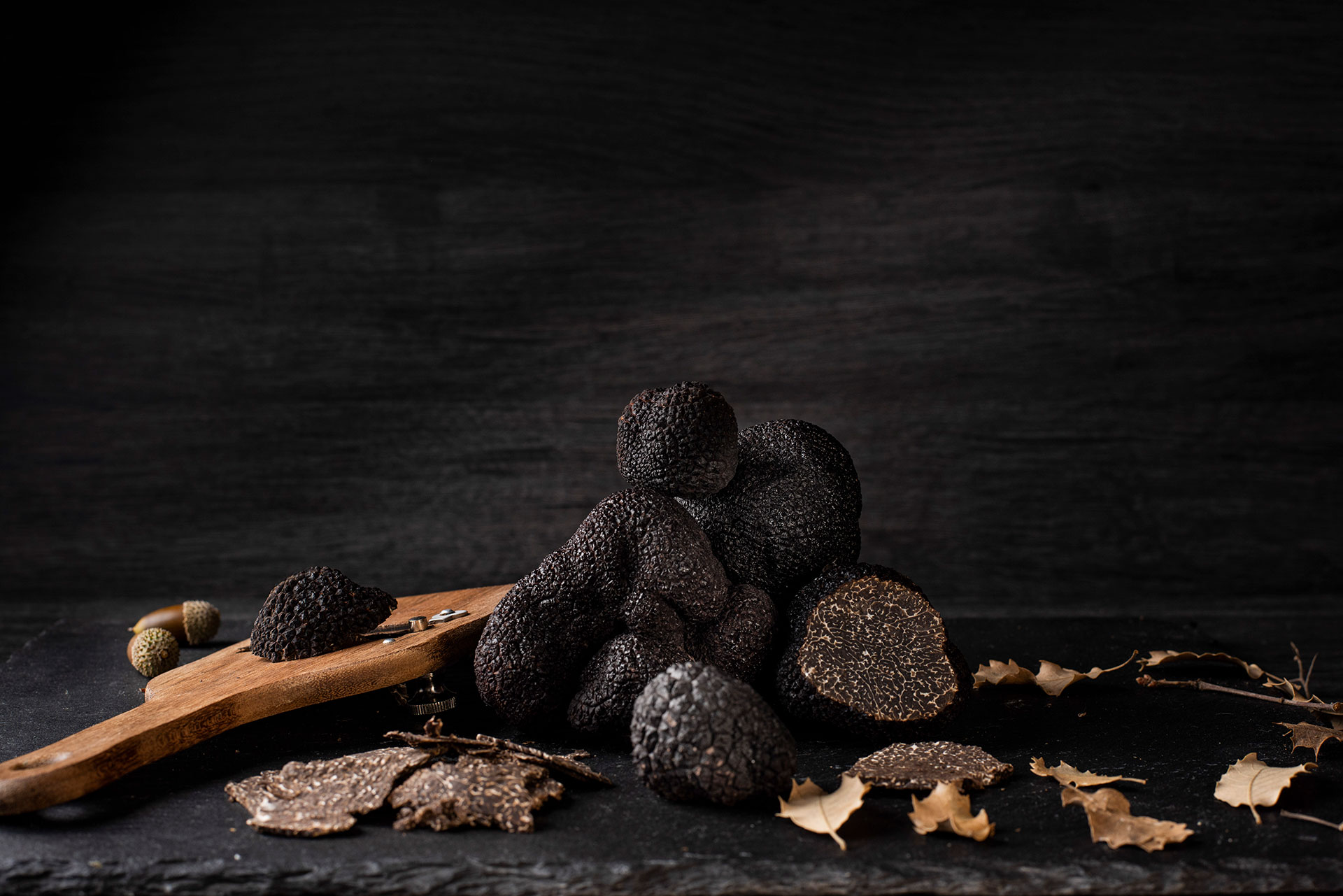
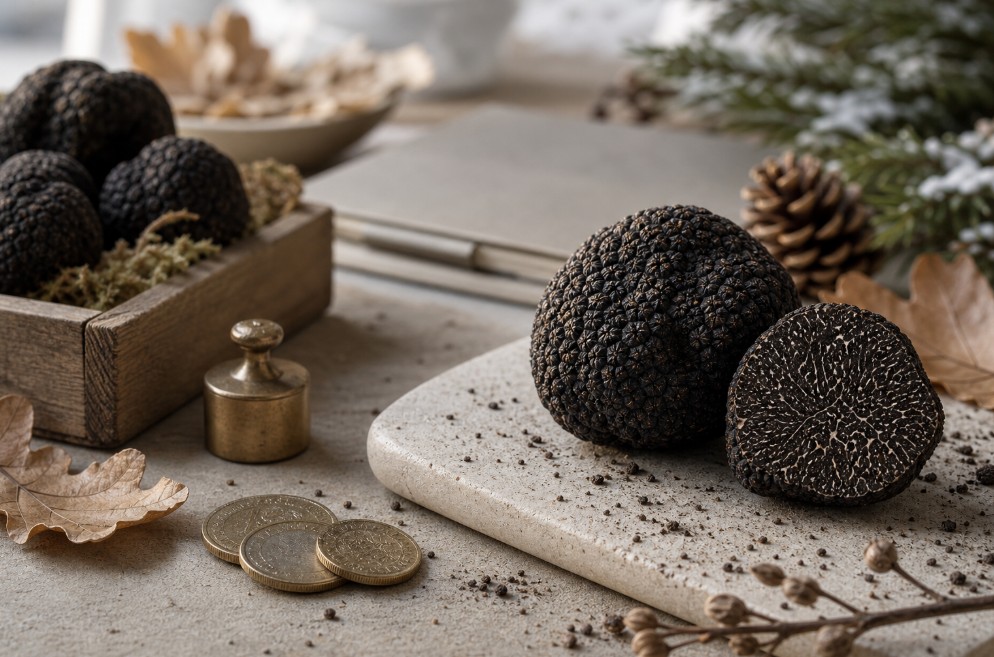
The words “black truffle” are not enough. A specialist should state that it works with Tuber melanosporum Vitt., the prized winter black truffle, known for its aroma and for a dark interior crossed by fine, pale veins when ripe. If other species are mentioned, they should also be named because each one has a different season, appearance and aromatic intensity.
This precision helps you recognise a quality black truffle and prevents confusion between Tuber melanosporum Vitt. and truffles with a beige or whitish interior and a milder aroma.
It discusses origin and cultivation without vague claims
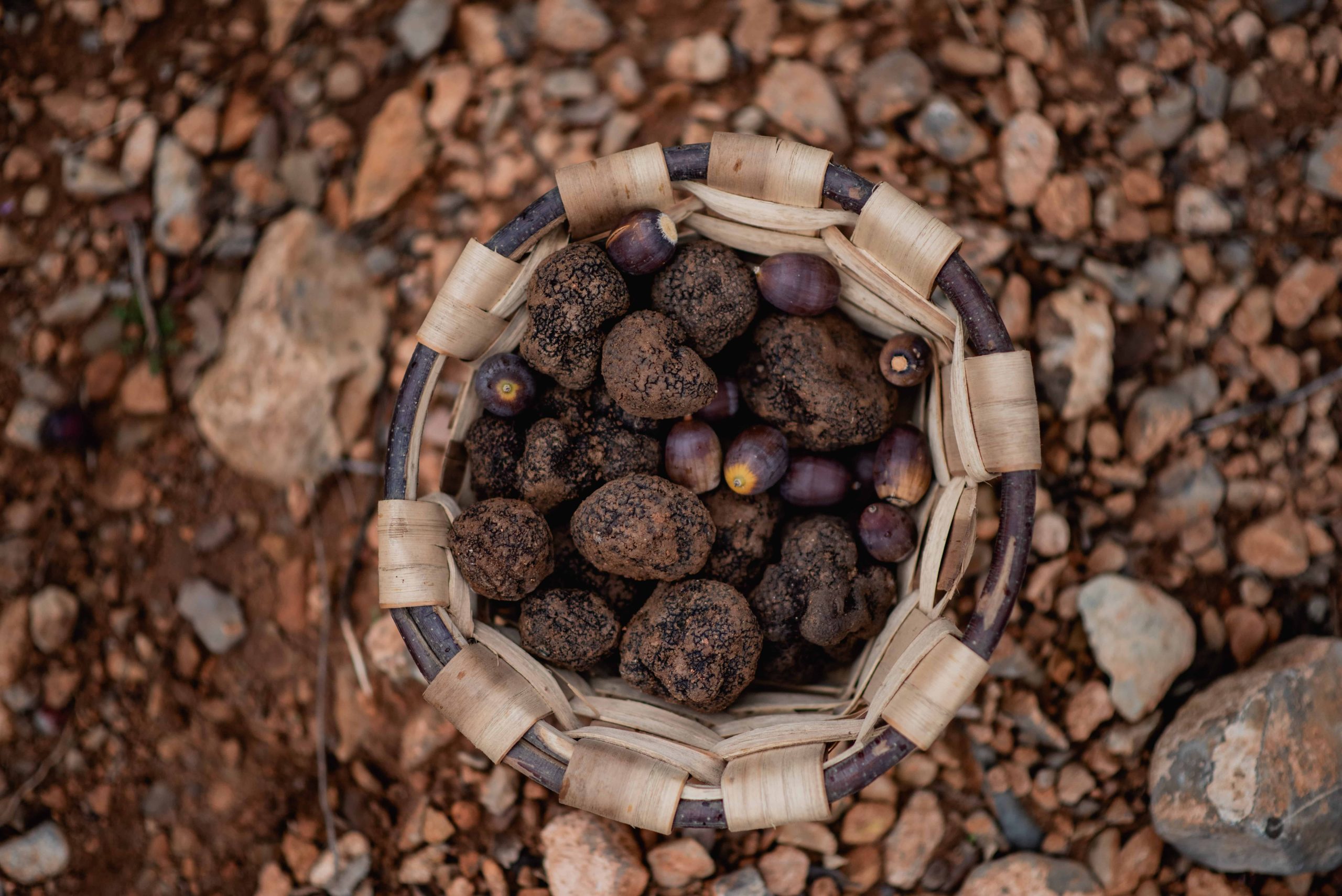
Sarrión lies in Gúdar-Javalambre, Teruel, an area closely associated with black truffle cultivation. A serious producer can explain the environment in which the product was grown and how the orchard is managed, without hiding behind phrases such as “locally sourced” or “Spanish product”.
It should also explain that almost all black truffle produced in Spain today is cultivated rather than wild. This does not reduce its value: it means the truffle develops in carefully managed orchards of inoculated host trees.
It explains the season and does not promise fresh truffle all year
Tuber melanosporum Vitt. has a winter season, usually concentrated between November and March. Exact dates vary with the weather and ripening, but fresh supply is not constant throughout the year.
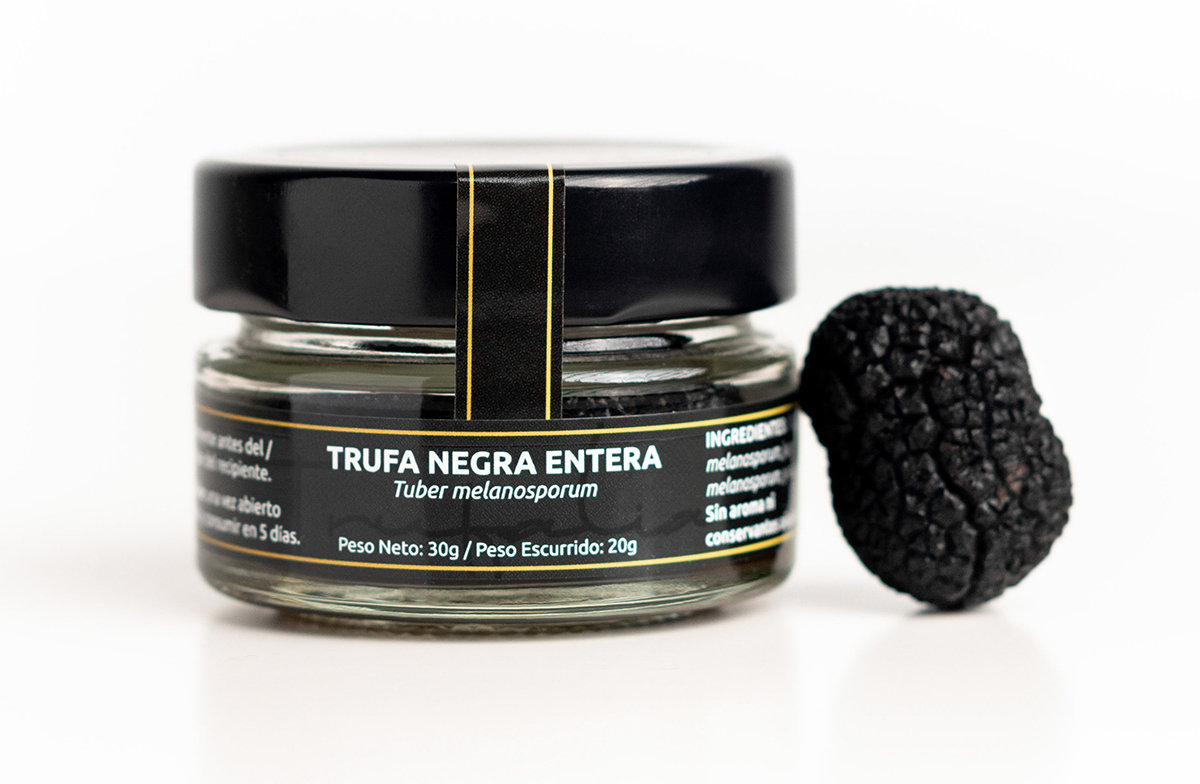
Outside the season, a specialist clearly distinguishes fresh truffle from preserved formats. It also explains how each option behaves and helps you buy black truffle and choose the right piece for the recipe, date and intended use.
It describes how every piece is selected
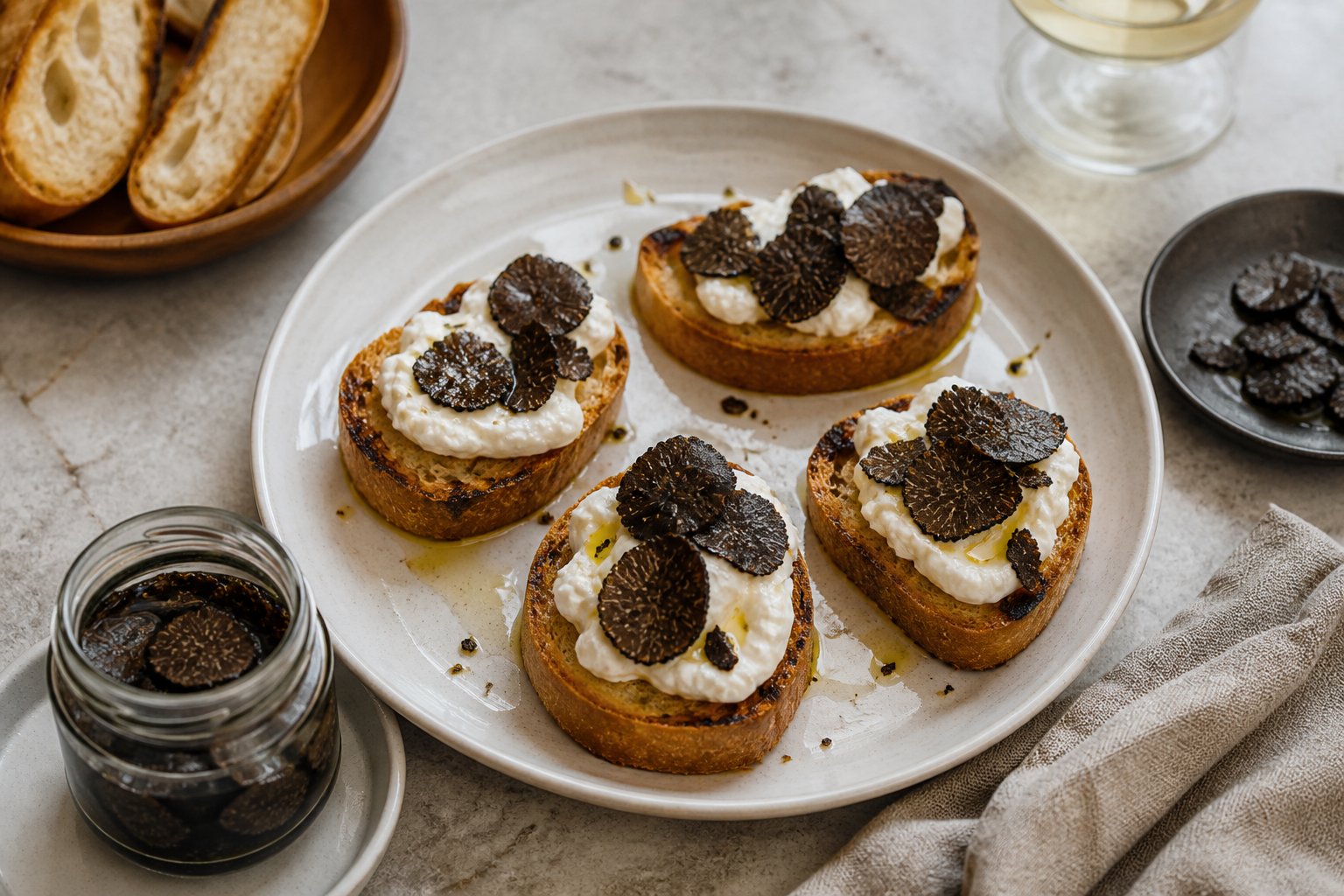
Specialisation becomes clear when the supplier discusses maturity, firmness, aroma, integrity and size. Not every truffle is best used in the same way: an evenly shaped piece may be easier to slice, while other shapes can be ideal for grating or cooking.
Good grading is not simply about a uniform appearance. Damaged or overripe pieces should be rejected and the actual condition of the product should take priority. Size alone is not a reliable promise of aroma.
It can explain storage, packaging and delivery
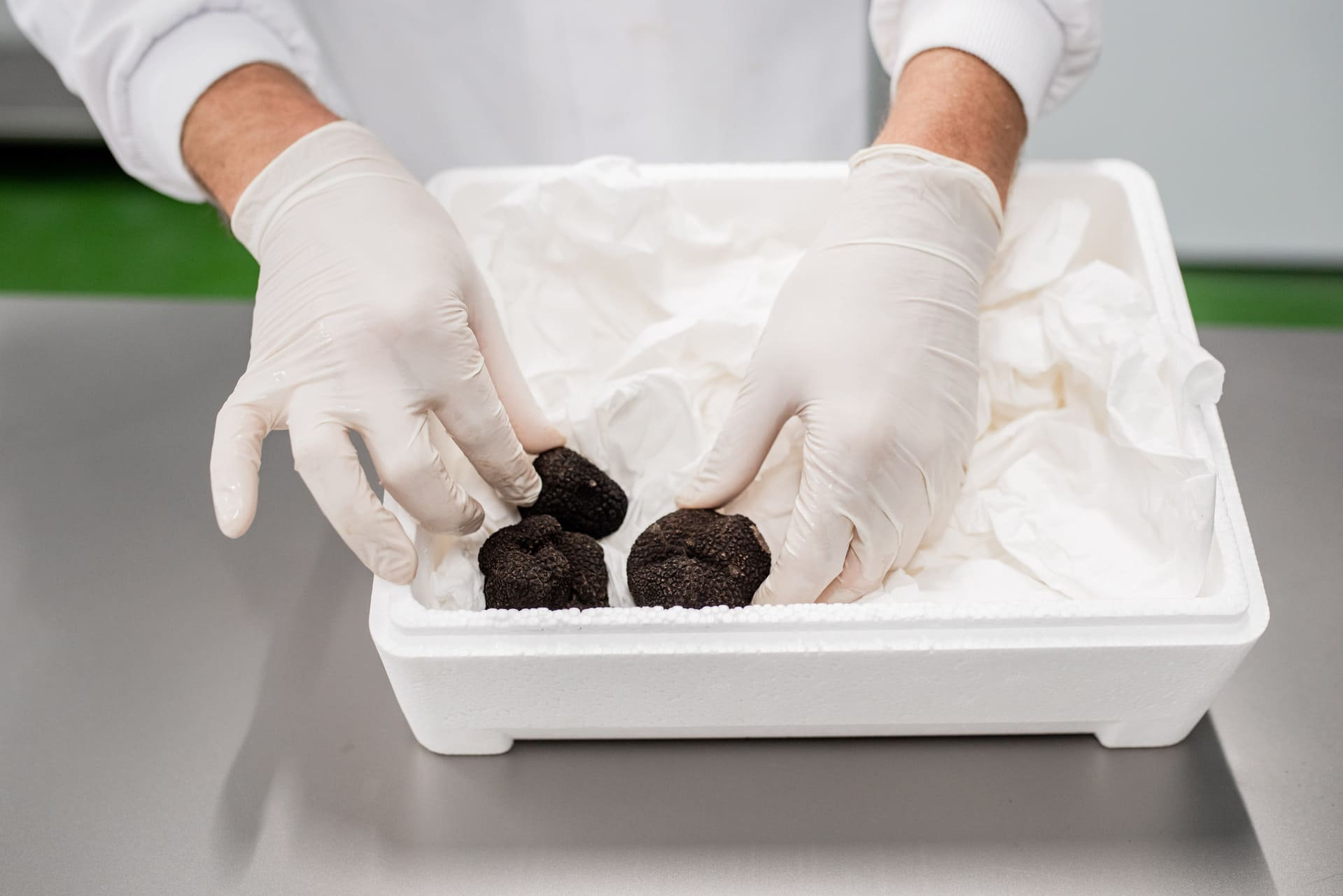
Fresh truffle gradually loses aroma with time. The producer’s work therefore continues after harvesting: the product must be stored correctly, prepared promptly and packed to protect it in transit.
A specialist supplier gives clear information about timing, packing and home storage. Knowing how a truffle order should arrive helps you assess aroma, firmness, moisture and protection as soon as the parcel is opened.
Questions to ask before buying

You do not need expert knowledge of truffle farming. A few direct questions can reveal whether the supplier understands the product:
- Which truffle species is it, and how is it identified?
- Which area and orchard does it come from?
- Is it currently in season, and how mature is it?
- How has it been graded, and which uses suit it best?
- How is it stored before dispatch, and how long will delivery take?
- What should you do on arrival to preserve its aroma?
Answers should be clear, consistent and relevant to the purchase. Missing information, evasive replies or promises of permanent fresh supply are reasons to ask further questions.
Warning signs of a less specialised offer
Be cautious when a seller always uses the generic term “black truffle”, never shows or describes the inside, avoids specifying origin or bases the entire offer on price. Treating fresh truffle as an identical year-round product, or being unable to explain storage and shipping, should also prompt closer scrutiny.
Another sign is a lack of practical advice. Anyone who regularly handles Tuber melanosporum Vitt. knows that prolonged heat weakens its aroma, that it should be used promptly and that the right format depends on the dish. This guidance is part of the service, not an optional extra.
Specialisation is demonstrated before and after the sale
A genuine Sarrión black truffle producer offers more than an appealing place name. It provides traceability, selection, sound judgement and support, helping the truffle arrive in good condition and be used properly.
At Trufalia, three generations linked to Teruel black truffle bring together field knowledge, careful selection of Tuber melanosporum Vitt. and practical advice on storage and use. To distinguish a specialist from a simple reseller, focus on evidence it can explain and stand behind: species, origin, season, condition and delivery care.