Preparar una cena trufada en casa es una forma sencilla de disfrutar de uno de los productos más valorados de la gastronomía sin necesidad de elaborar recetas complicadas. El secreto no está en cocinar platos muy sofisticados, sino en crear un menú equilibrado en el que la trufa sea la protagonista.
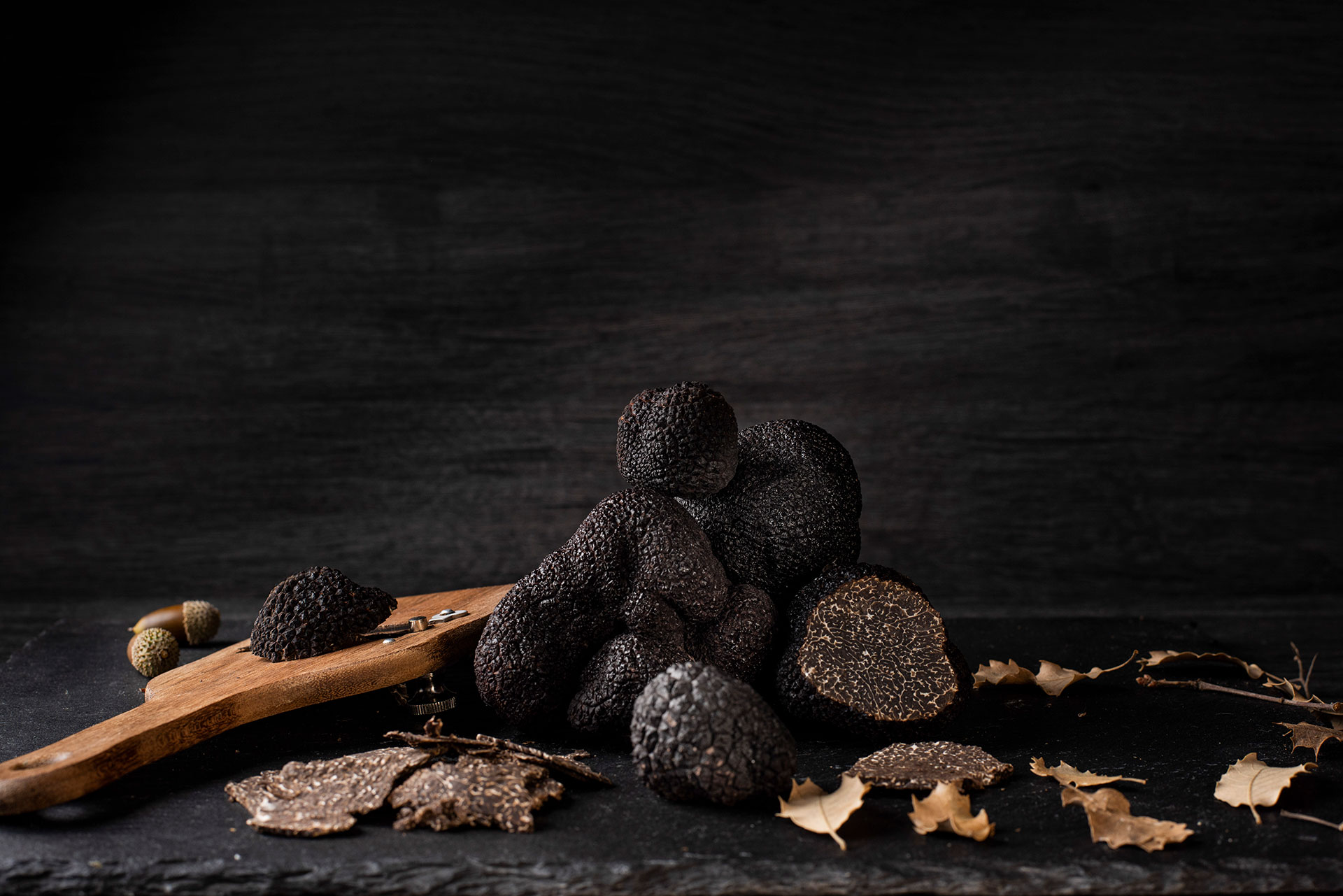
La trufa negra Tuber melanosporum Vitt. posee un aroma intenso, elegante y muy característico. Por ello, ofrece sus mejores resultados cuando se combina con ingredientes de sabor suave que permiten apreciar todos sus matices sin competir con ellos.
Con una buena planificación y productos de calidad, es posible preparar una cena especial que sorprenda a los invitados sin pasar horas entre fogones.
Qué debe tener una cena trufada sencilla y equilibrada
Una buena cena trufada debe construirse alrededor de la sencillez. Es habitual pensar que, al tratarse de un ingrediente exclusivo, debe acompañarse de elaboraciones muy complejas. Sin embargo, ocurre justamente lo contrario.
Lo más recomendable es diseñar un menú con pocos ingredientes y sabores bien definidos. De esta manera, el aroma de la trufa puede apreciarse desde el primer bocado.
Un menú equilibrado puede componerse de un entrante, un plato principal y un postre ligero. No es necesario utilizar trufa en todas las elaboraciones. De hecho, suele ser preferible reservarla para uno o dos platos, permitiendo que conserve todo su protagonismo.
Las grasas suaves también desempeñan un papel importante. Ingredientes como la mantequilla, el aceite de oliva virgen extra, la nata o la yema de huevo ayudan a distribuir los compuestos aromáticos de la trufa y prolongan su presencia en boca.
El resultado es un menú armonioso donde cada plato prepara el siguiente sin saturar el paladar.
Cómo elegir el formato de trufa según la época y el menú
La elección dependerá principalmente de la temporada y del tipo de receta que se quiera preparar.
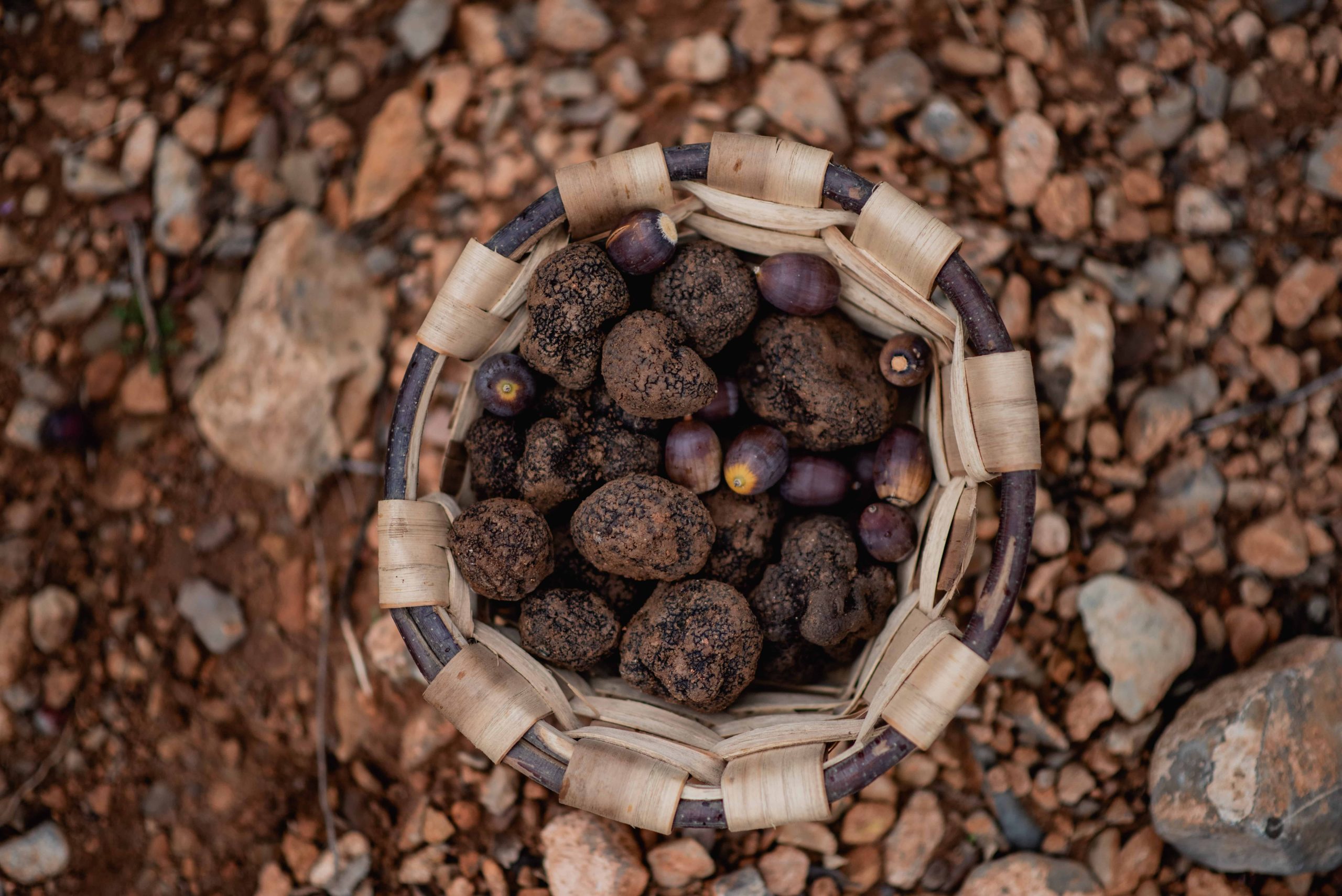
Durante el invierno, la mejor opción es disfrutar de la trufa negra fresca Tuber melanosporum Vitt. Es en este periodo cuando desarrolla toda su intensidad aromática y permite apreciar mejor sus características.
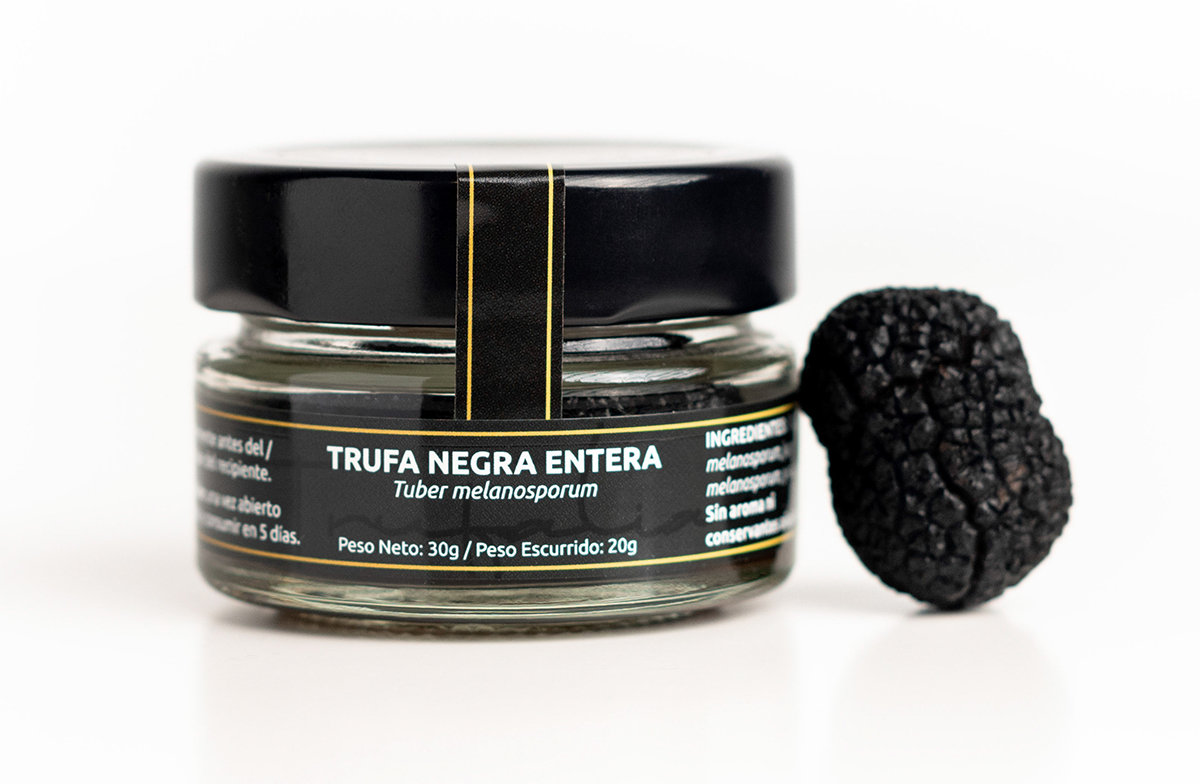
Cuando no es temporada, también existen otros formatos que permiten incorporar la trufa a diferentes recetas, como mantequillas trufadas, carpaccios, conservas o aceites aromatizados. Estos productos pueden resultar muy útiles para determinadas preparaciones, siempre que se elaboren con materias primas de calidad.
Si el menú gira alrededor de platos sencillos, la trufa fresca seguirá siendo la mejor elección para disfrutar plenamente de su aroma.
Recuerda que en Trufalia puedes encontrar el mejor carpaccio de trufa negra.
Propuesta de cena trufada con platos fáciles de coordinar
Organizar un menú completo no tiene por qué ser complicado. Una propuesta sencilla puede combinar recetas fáciles de preparar y servir.
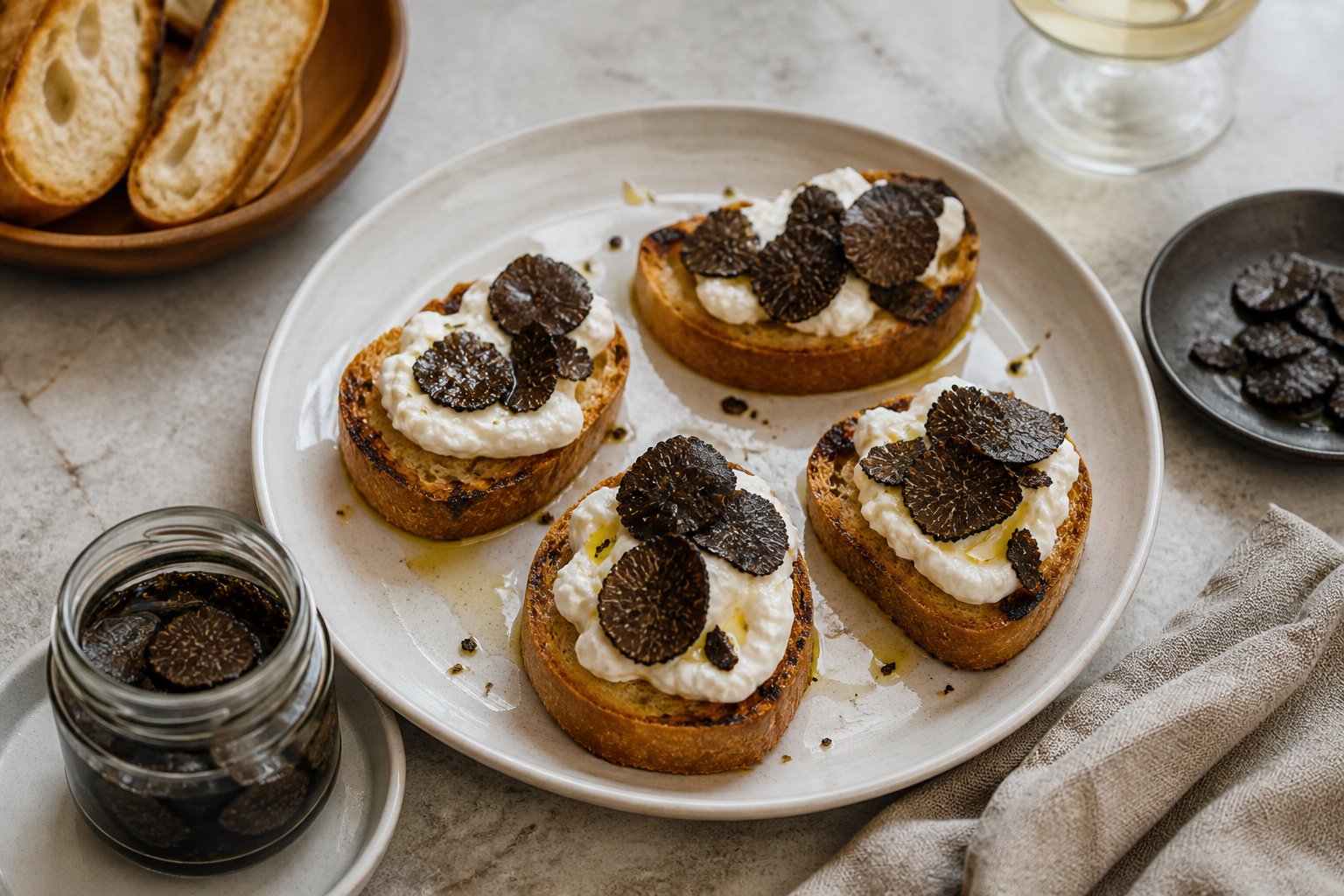
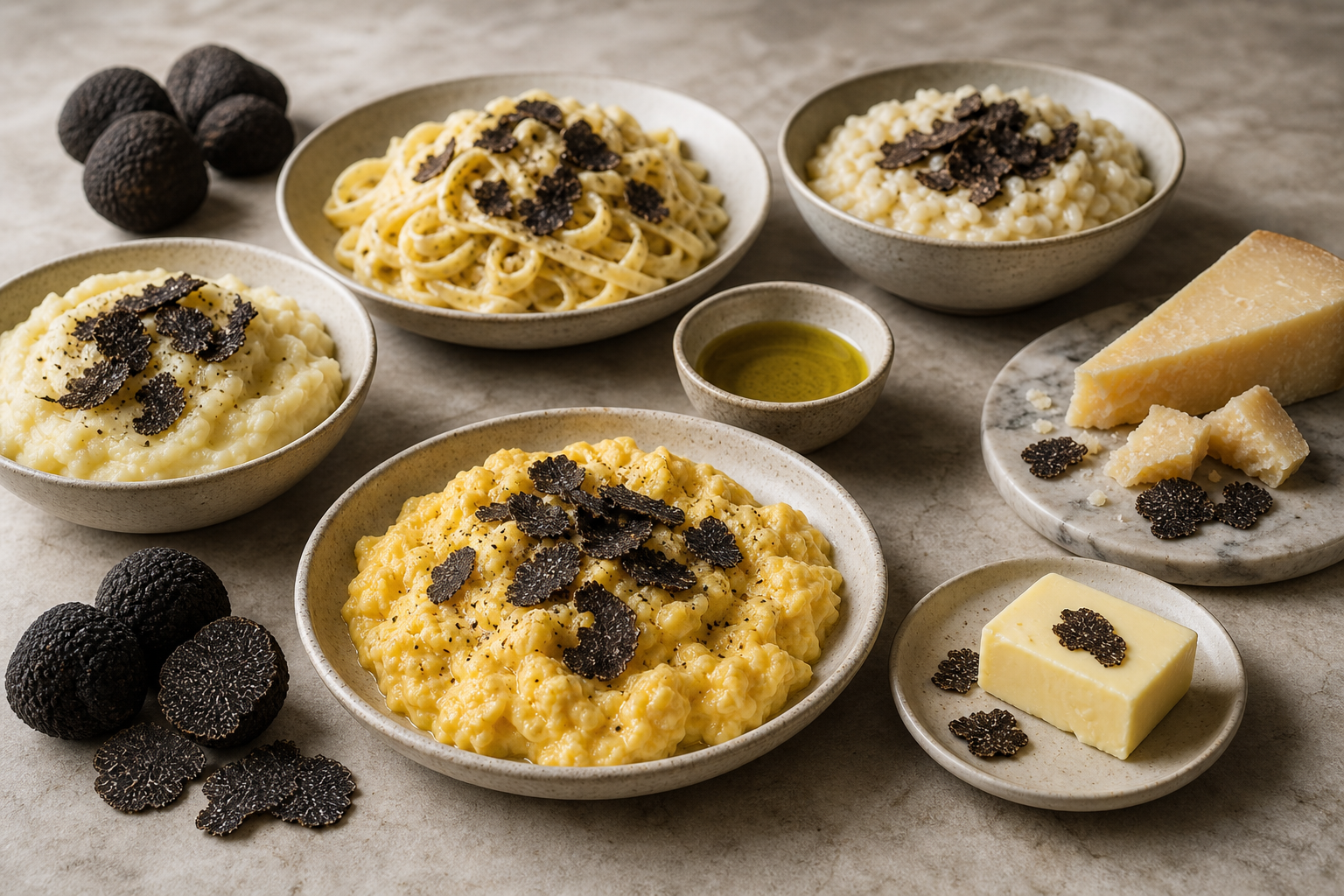
Como entrante, una crema de patata o de coliflor terminada con unas láminas de trufa constituye una opción elegante y muy aromática.
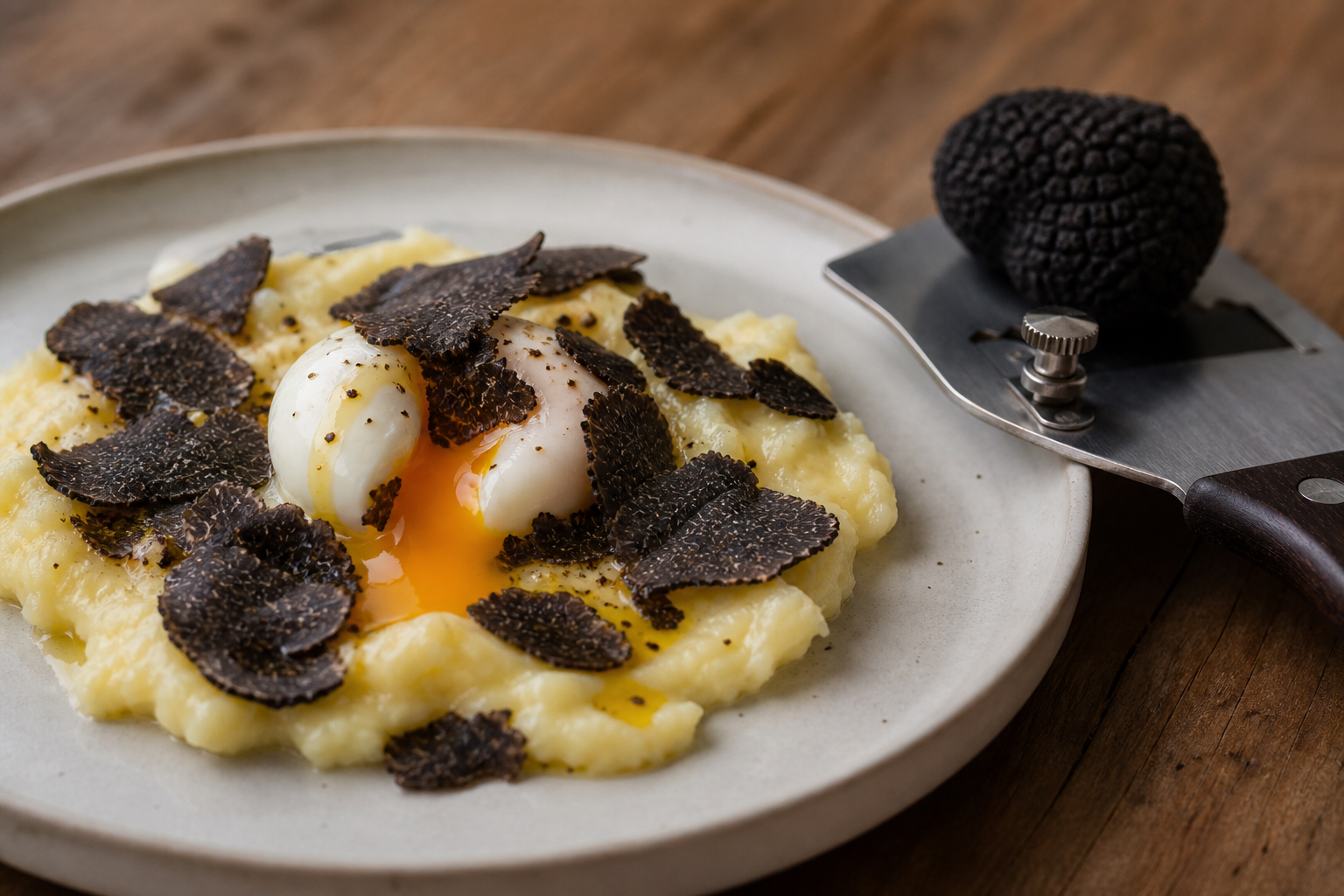
Como segundo plato, unos huevos a baja temperatura sobre un puré de patata con trufa rallada representan una de las combinaciones clásicas de la cocina con trufa. La suavidad de la patata y la cremosidad de la yema permiten apreciar perfectamente el aroma de la Tuber melanosporum Vitt.
Otra alternativa consiste en preparar un risotto cremoso o una pasta fresca con mantequilla, parmesano y trufa laminada. También puede optarse por un solomillo de ternera o un pollo de corral acompañado de verduras de temporada o un puré de apionabo.
Para terminar, es preferible servir un postre ligero, como una panna cotta, un helado de vainilla o una macedonia de fruta fresca. De este modo, el recuerdo aromático de la trufa permanece hasta el final de la comida.
Échale un vistazo a este post:
¿Qué combina bien con la trufa negra?
Cuánta trufa calcular para los comensales
Calcular la cantidad adecuada de trufa es una de las dudas más frecuentes al preparar este tipo de cenas.
Como orientación general, suele bastar con entre 8 y 15 gramos de trufa fresca por persona cuando aparece como ingrediente principal en uno o dos platos del menú.
Si únicamente se utiliza para aportar un toque final, pueden emplearse cantidades algo menores. En cambio, si toda la experiencia gastronómica gira en torno a la trufa, es recomendable acercarse a la parte superior de esa horquilla.
No conviene excederse. La Tuber melanosporum Vitt. posee un aroma muy intenso y unas pocas láminas bien repartidas son suficientes para transformar completamente un plato.
Te puede interesar:
Cuánta trufa negra usar por persona sin pasarte ni quedarte corto
Cómo organizar los tiempos para añadir la trufa en el momento adecuado
Una correcta organización permite conservar intactas las cualidades aromáticas de la trufa.
Las cremas, purés, salsas o guarniciones pueden prepararse con antelación y calentarse justo antes del servicio. Esto facilita que toda la atención pueda centrarse en la incorporación de la trufa.
Lo ideal es laminarla o rallarla cuando el plato ya está terminado y no recibe calor directo. Las temperaturas excesivamente altas provocan que parte de sus compuestos aromáticos se volatilicen y disminuya su intensidad.
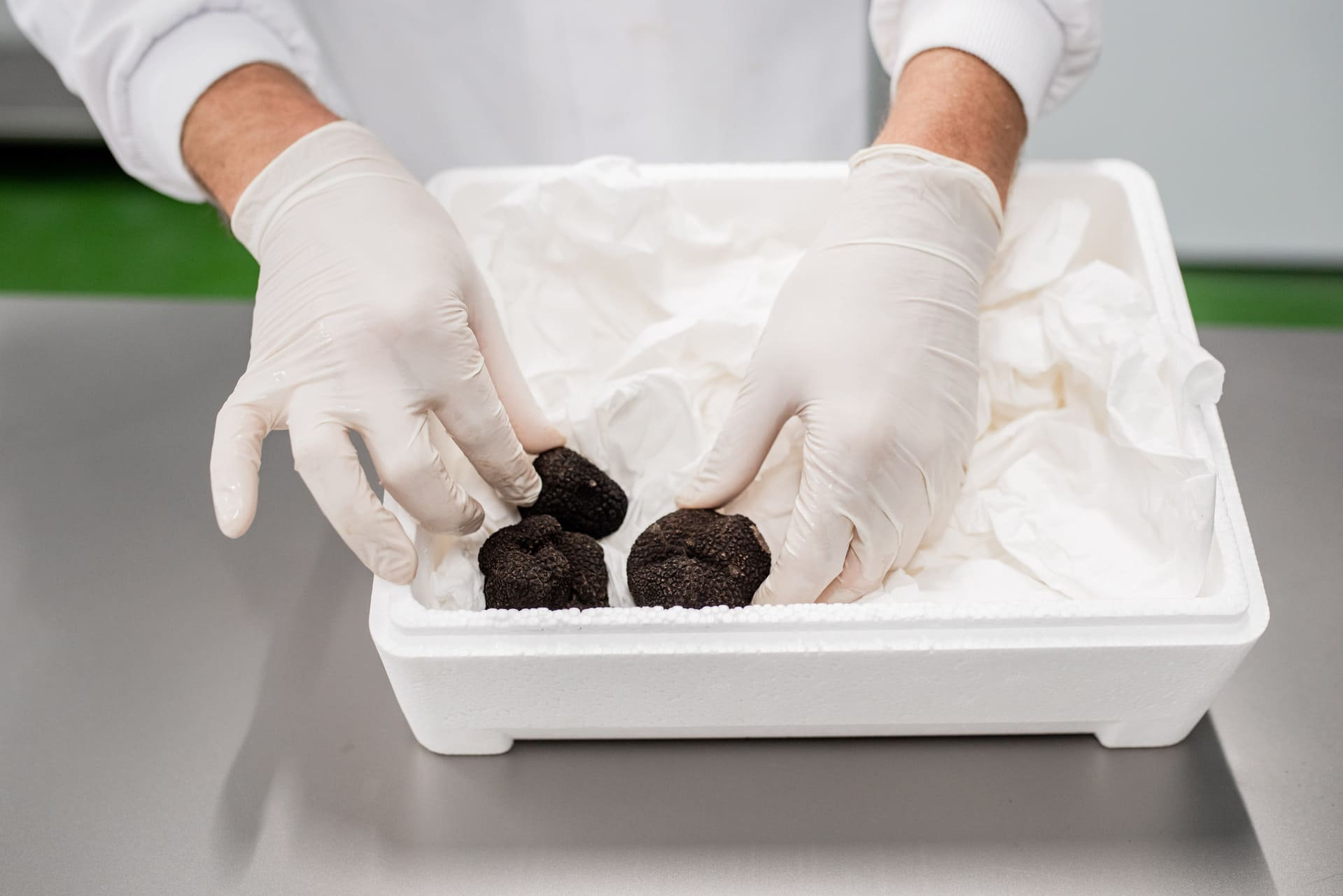
También resulta recomendable sacar la trufa del frigorífico unos minutos antes de utilizarla para que alcance una temperatura adecuada y exprese mejor todo su perfume.
Si se sirven varios platos, conviene tener preparado el laminador o rallador para incorporar la trufa rápidamente justo antes de llevar cada elaboración a la mesa.
Errores que pueden restar aroma o equilibrio al menú
Existen algunos errores que pueden hacer que una cena trufada pierda parte de su atractivo.
Uno de los más frecuentes consiste en utilizar ingredientes con sabores demasiado intensos, como grandes cantidades de ajo, especias muy aromáticas, picantes o salsas muy condimentadas. Todos ellos compiten directamente con el aroma de la Tuber melanosporum Vitt.
Otro error habitual es cocinar la trufa durante demasiado tiempo. Lo recomendable es incorporarla al final de la elaboración para preservar al máximo sus compuestos aromáticos.
También conviene evitar recetas con demasiados ingredientes. Cuanto más sencilla sea la elaboración, más fácil será apreciar la personalidad de la trufa.
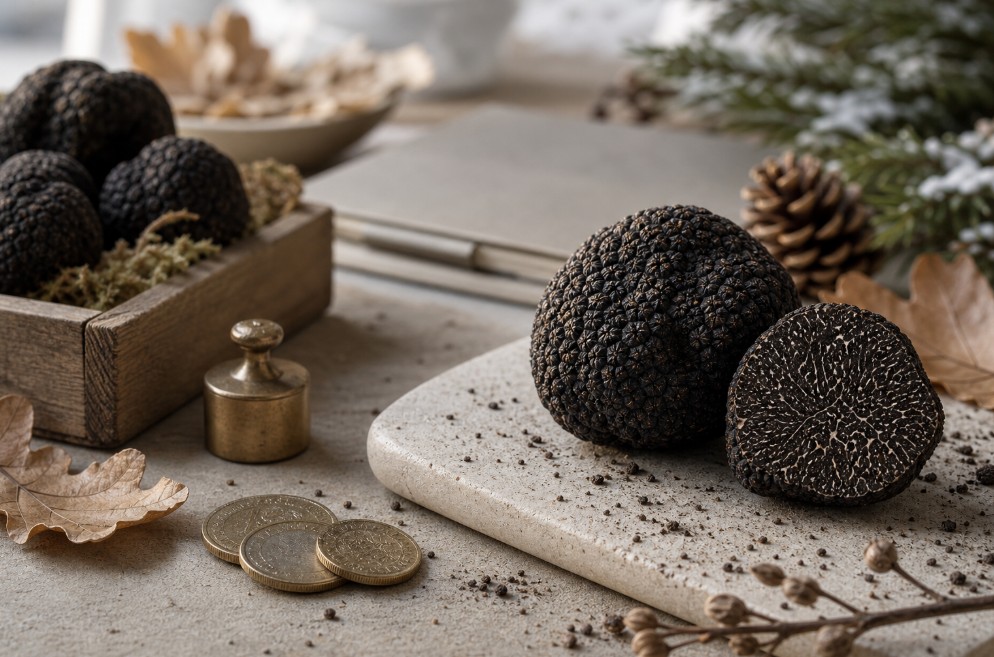
Por último, es importante asegurarse de utilizar auténtica trufa negra Tuber melanosporum Vitt. Existen otras especies del género Tuber con un aspecto similar, pero presentan un interior más claro y un aroma considerablemente menos intenso. La Tuber melanosporum Vitt. se distingue precisamente por su característico interior negro y por la riqueza de su perfume, dos cualidades que la convierten en una de las variedades más apreciadas.
Con un menú bien planificado, ingredientes sencillos y un uso adecuado de la trufa, cualquier comida puede convertirse en una experiencia gastronómica inolvidable. La clave está en respetar el protagonismo de este ingrediente excepcional y dejar que su aroma sea el verdadero hilo conductor de toda la cena.
Preparing a truffle dinner at home is an easy way to enjoy one of the most highly prized ingredients in gastronomy without having to cook complicated recipes. The secret is not to create elaborate dishes, but to design a balanced menu where truffle takes centre stage.
Black truffle Tuber melanosporum Vitt. has an intense, elegant and distinctive aroma. For this reason, it delivers its best results when paired with mild-flavoured ingredients that allow all of its nuances to shine without competing with them.
With good planning and high-quality ingredients, it is possible to prepare a special dinner that will impress your guests without spending hours in the kitchen.
What a simple and well-balanced truffle dinner should include
A good truffle dinner should be built around simplicity. Many people assume that, because truffle is such an exclusive ingredient, it must be paired with highly elaborate recipes. In reality, the opposite is true.
The best approach is to create a menu with just a few carefully selected ingredients and clearly defined flavours. This allows the aroma of the truffle to be appreciated from the very first bite.
A balanced menu can include a starter, a main course and a light dessert. There is no need to use truffle in every dish. In fact, it is often better to reserve it for one or two courses so that it retains its full impact.
Gentle fats also play an important role. Ingredients such as butter, extra virgin olive oil, cream and egg yolk help distribute the truffle’s aromatic compounds and prolong its flavour on the palate.
The result is a harmonious menu in which each course naturally leads into the next without overwhelming the senses.
How to choose the right truffle format for the season and the menu
The best choice depends mainly on the season and the type of recipes you plan to prepare.
During winter, fresh black truffle Tuber melanosporum Vitt. is undoubtedly the best option. This is when it reaches its peak aromatic intensity and fully expresses its distinctive characteristics.
Outside the fresh truffle season, there are several alternatives that allow you to incorporate truffle into your cooking, including truffle butter, truffle carpaccio, preserved truffles and truffle-infused oils. These products can be excellent choices for certain recipes, provided they are made with high-quality ingredients.
If your menu focuses on simple dishes, fresh truffle will always remain the best option for enjoying its full aroma.
Remember that at Trufalia you can find premium black truffle carpaccio.
A simple truffle dinner menu that’s easy to coordinate
Preparing a complete menu doesn’t have to be difficult. A simple selection of dishes can be both easy to prepare and elegant to serve.
As a starter, a creamy potato or cauliflower soup finished with thin slices of truffle offers a refined and highly aromatic beginning.
For the main course, slow-cooked eggs served over mashed potatoes with freshly grated truffle represent one of the most classic combinations in truffle cuisine. The smoothness of the potato and the richness of the yolk perfectly highlight the aroma of Tuber melanosporum Vitt.
Another excellent option is a creamy risotto or fresh pasta with butter, Parmesan cheese and shaved truffle. Alternatively, you could serve beef tenderloin or free-range chicken with seasonal vegetables or celeriac purée.
To finish the meal, a light dessert such as panna cotta, vanilla ice cream or fresh fruit salad provides the perfect ending while allowing the memory of the truffle’s aroma to linger.
Take a look at this post:
What goes well with black truffle?
How much truffle should you serve per guest?
Determining the right amount of truffle is one of the most common questions when planning this type of dinner.
As a general guideline, between 8 and 15 grams of fresh truffle per person is usually sufficient when it features prominently in one or two courses.
If it is only being used as a finishing touch, smaller quantities may be enough. On the other hand, if the entire dining experience revolves around truffle, it is worth using amounts closer to the upper end of this range.
There is no need to overdo it. Tuber melanosporum Vitt. has a very powerful aroma, and just a few thin slices can completely transform a dish.
You may also be interested in:
How much black truffle should you use per person without using too much or too little?
How to organise your timing to add the truffle at the perfect moment
Good organisation is essential for preserving the truffle’s aromatic qualities.
Soups, purées, sauces and side dishes can all be prepared in advance and reheated just before serving. This allows you to focus entirely on adding the truffle at the right moment.
Ideally, the truffle should be shaved or grated once the dish is finished and no longer exposed to direct heat. High temperatures cause some of its aromatic compounds to evaporate, reducing its intensity.
It is also advisable to remove the truffle from the refrigerator a few minutes before use so it can reach the ideal temperature and release its full fragrance.
If several courses are being served, it helps to have your truffle slicer or grater ready so the truffle can be added immediately before each dish reaches the table.
Mistakes that can reduce the truffle’s aroma or upset the balance of the menu
There are several common mistakes that can diminish the impact of a truffle dinner.
One of the most frequent is combining truffle with ingredients that have overpowering flavours, such as large amounts of garlic, strong spices, chilli or heavily seasoned sauces. These ingredients compete directly with the aroma of Tuber melanosporum Vitt.
Another common mistake is cooking the truffle for too long. To preserve its aromatic compounds, it is best added at the very end of the cooking process.
It is also advisable to avoid recipes containing too many ingredients. The simpler the dish, the easier it is to appreciate the unique character of the truffle.
Finally, make sure you are using genuine black truffle Tuber melanosporum Vitt. There are other species within the Tuber genus that look similar, but they have a much lighter interior and a considerably milder aroma. Tuber melanosporum Vitt. is distinguished by its characteristic black interior and its rich, complex fragrance, making it one of the world’s most highly prized truffle varieties.
With a carefully planned menu, simple ingredients and the proper use of truffle, any meal can become an unforgettable culinary experience. The key is to let this exceptional ingredient remain the star of the menu and allow its remarkable aroma to tie the entire dining experience together.