Two products can display the word ‘truffle’ prominently while containing very different recipes. To compare them, looking at the front picture or searching for the highest percentage is not enough. Read the name of the food, the ingredient list, the truffle species, its quantity and the flavouring declaration, in that order.
This approach is useful for sauces, cheeses, oils, creams, carpaccios and preserves, although the required information may vary with the type of food. The purpose is not to turn shopping into a legal inspection, but to understand what you are buying, the role played by the truffle and whether the product suits the dish you have in mind.
Do not decide from the name or front image alone
The front of a pack is designed to identify and present the product. It may contain a truffle image, a marketing expression or words such as ‘truffled’, but the composition is established by the legal name and ingredient list. Turn the pack over before comparing prices or promises.
In March 2026, Spain’s Food Quality Coordination Board published an interpretation criterion concerning the term ‘truffled’ on food. Its conclusions included avoiding the presentation of a product as truffled when the effect comes solely from flavourings.
Find the truffle species
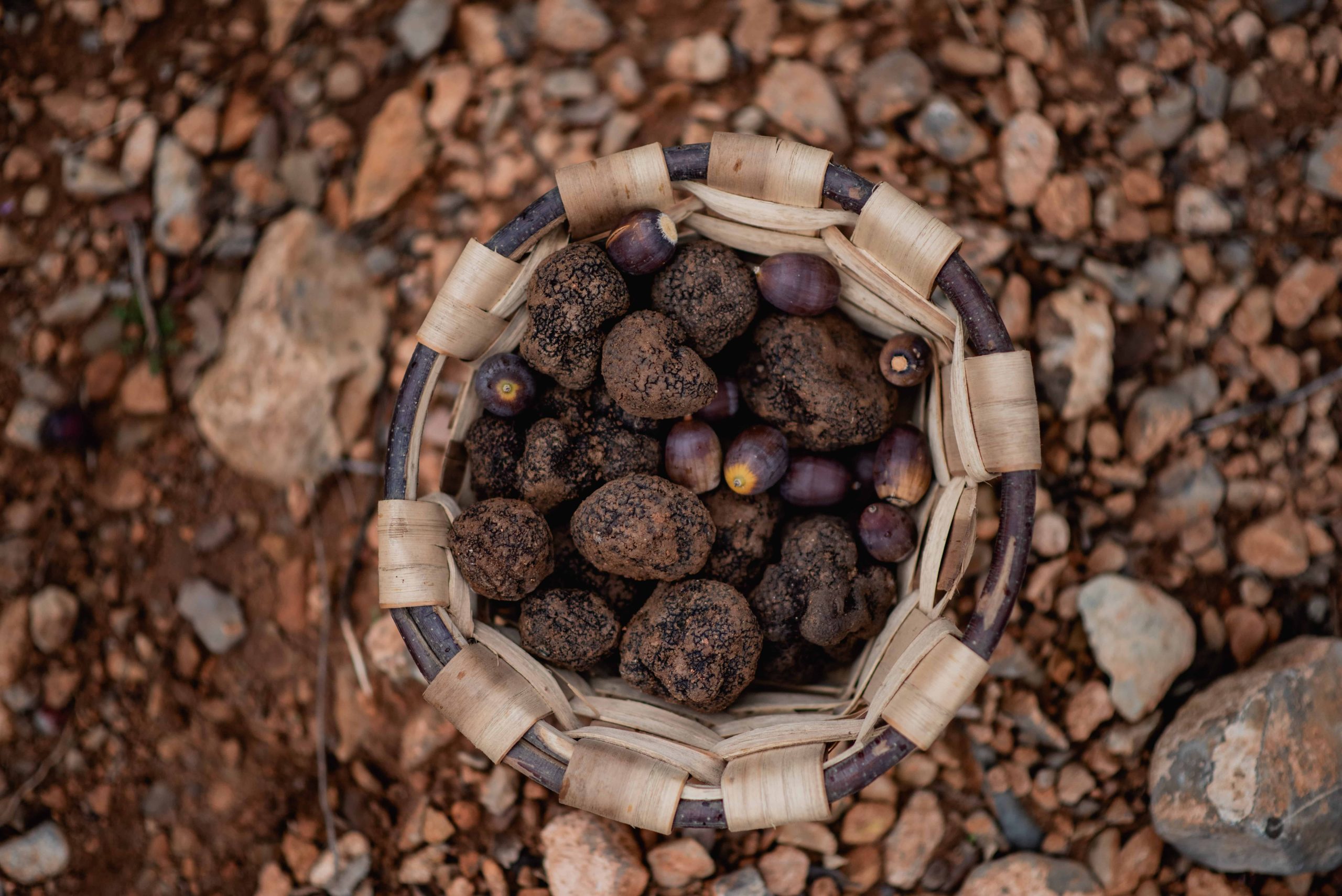
‘Truffle’ does not refer to a single raw material. Each species has its own colour, aroma, flavour, season and gastronomic value. If you want winter black truffle, the scientific name to look for is Tuber melanosporum Vitt., with the genus capitalised and the species in lower case.
Other species may be correctly identified, such as summer truffle Tuber aestivum or Piedmont white truffle Tuber magnatum. They are not interchangeable versions of one ingredient. A product can be valid and well made with any of these species, but you need to know which one it contains to compare like with like.
Do not infer the species from an illustration, the pack colour or the generic phrase ‘black truffle’. To explore the visual and aromatic differences, see how to recognise this black truffle compared with other truffles.
Interpret the percentage in context
European food information rules require the quantity of an ingredient to be stated when it appears in the name of the food, is emphasised in words or pictures, or is essential to characterise the food, subject to certain exceptions. The figure is usually expressed as a percentage and tells you how much of the recipe the truffle represents.
However, one percentage does not sum up quality. Compare products in the same category: it makes little sense to expect a flavoured oil to contain the same proportion as a jar of whole preserved truffles. The species, format, intended culinary use and rest of the recipe also matter.
In a sauce, for example, a small percentage may provide visible pieces while the aromatic profile relies largely on added flavourings. In a jar of whole truffles, the relationship between net weight and drained weight is more informative than a direct comparison with a cream. Read the figures alongside the exact name of the food.
What added flavourings mean
Flavourings are ingredients and must be declared as such. The word ‘flavouring’ does not automatically mean that it comes from truffle. Nor does ‘natural flavouring’ identify its source on its own. Under European rules, the expression ‘natural truffle flavouring’ may only be used when at least 95% of the flavouring component comes from the named source; the remainder may only standardise or round the profile.
These descriptions therefore need to be distinguished. ‘Flavouring’ tells you that a flavouring has been added. ‘Natural flavouring’ describes the natural character of its flavouring components, but not that they come from truffle. ‘Natural truffle flavouring’ links the description to that source under the rule above. The presence of flavouring and the presence of truffle are separate facts, and both may occur in the same product.
Added flavouring does not automatically make a food good or bad; it tells you how its sensory profile has been built. What matters is whether the information is clear and matches what you want. To recognise the variety’s own character, review the main features of its authentic aroma and flavour.
Read the ingredient order, weights and instructions
Ingredients are generally listed in descending order by weight at the time they are added. Their position helps you understand the structure of a cream or sauce, although it does not replace the percentage when that figure must be declared. Also check allergens, date marking, batch information and storage conditions.
For solid foods packed in a liquid medium, distinguish between net weight and drained weight. The first covers the entire contents; the second indicates the quantity of food after the packing liquid has been removed. This detail allows you to calculate the usable yield of a preserve more accurately.
Check the instructions for after opening as well. The manufacturer may require refrigeration and consumption within a stated period. This is operational information, not secondary small print: it affects both food safety and how well you can use the product.
A worked example: whole preserved black truffle
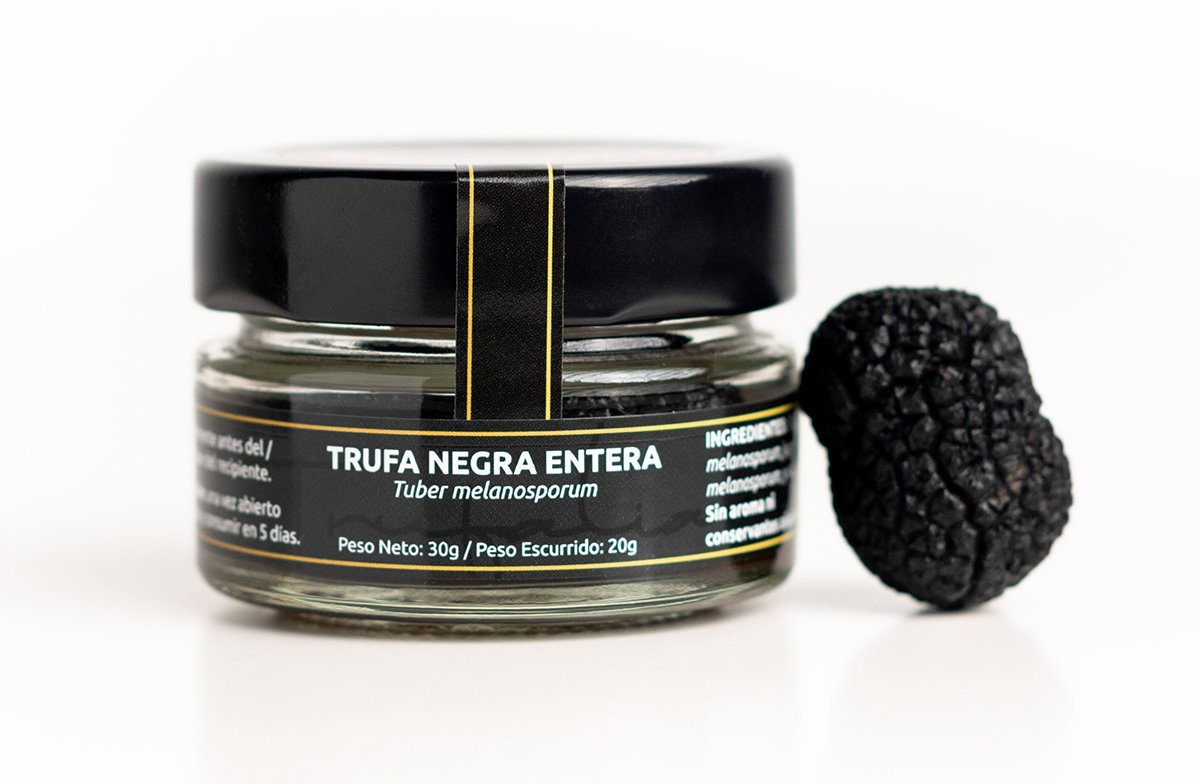
Trufalia’s whole preserved black truffle identifies the species Tuber melanosporum Vitt. and declares black truffle, truffle juice and salt. The format shown contains 30 grams net weight and 20 grams drained weight. Once opened, it should be kept chilled and eaten within the stated period.
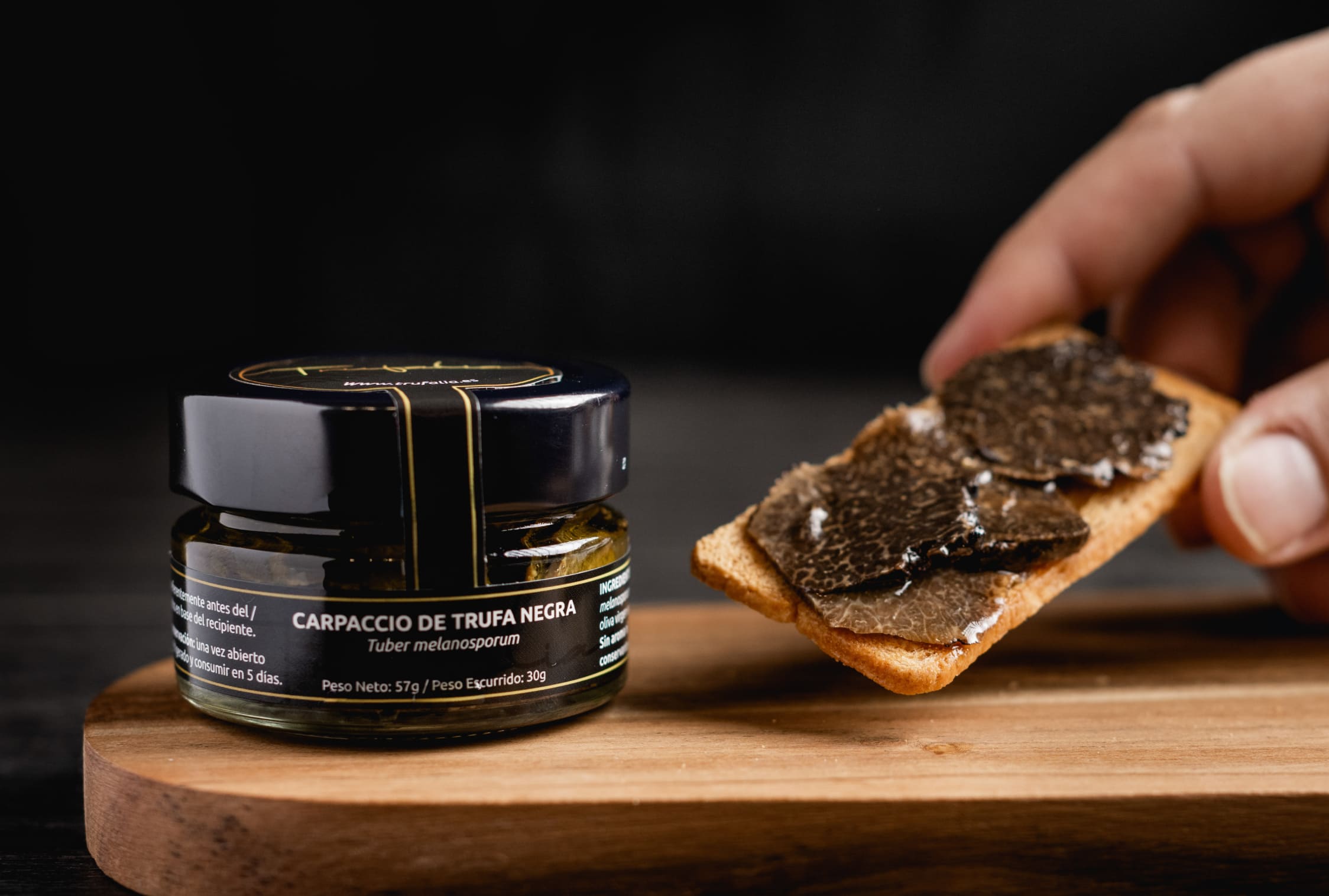
This information lets you anticipate what you will receive: whole pieces, a defined species and a packing liquid that can also be used in cooking. The product should not be compared only by percentage with a carpaccio, sauce or condiment. This guide to what truffle carpaccio is explains another presentation.
A useful label check in under a minute
Before buying, confirm the kind of food, find the truffle’s scientific name, check its stated quantity and locate any flavourings. Then review the ingredient order, usable weight and instructions after opening. This sequence prevents one highlighted word from determining the whole decision.
The best choice will not always be the product with the highest figure, but the one that offers precise information, the appropriate species and a format suited to your recipe. Reading the label this way allows you to make a genuine comparison and use each product as intended.